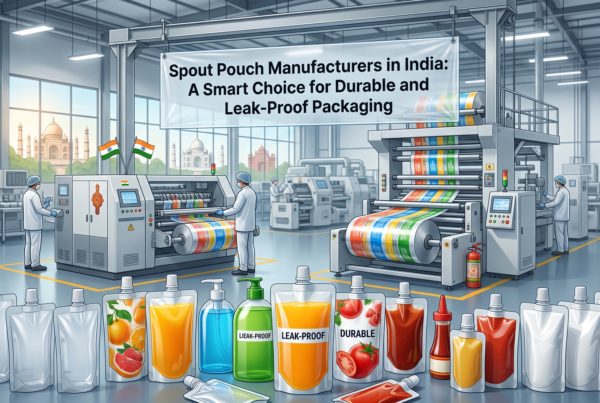
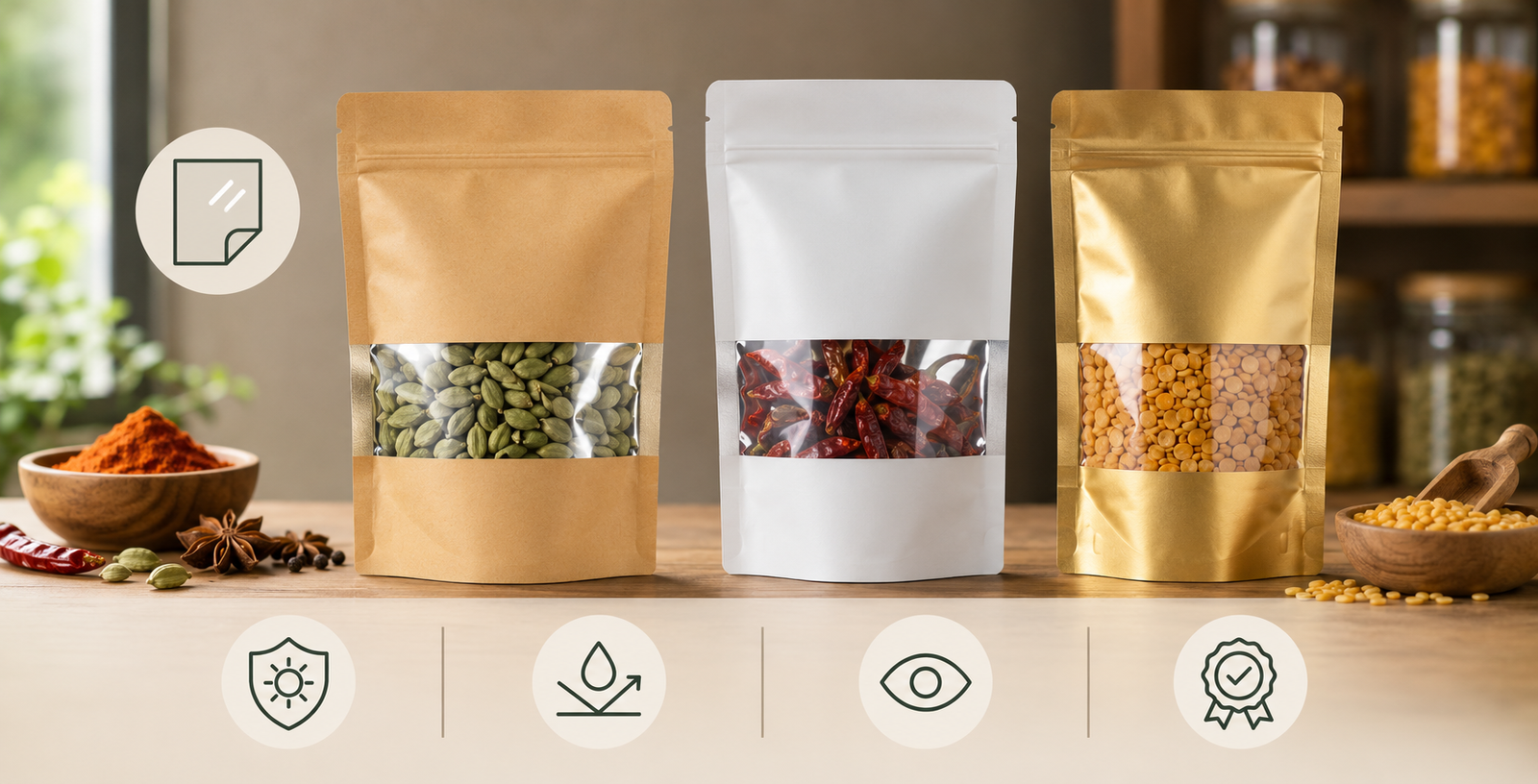
Walk down any spice or dry fruit aisle in a modern Indian supermarket and you will notice a packaging trend that has quietly become the category standard: the metallic pouch with a transparent window. This format – known as window metallised packaging – combines the premium visual appeal of metallisation with the consumer assurance of product visibility.
For brand owners and packaging buyers in the spices, dry fruits, pulses, snacks, and masala categories, choosing the right window metallised film structure is both a brand decision and a technical one. This guide compares the main options, explains the trade-offs, and helps you make the right specification choice.
Why Window Metallised Packaging Works for Spices and Dry Foods
Spices and dry foods present specific packaging challenges:
- They are moisture-sensitive – even small increases in moisture content cause caking, clumping, and microbial growth
- Many spices are UV-sensitive – exposure to light causes colour fading and flavour loss
- They are aromatic – barrier properties must contain volatile flavour compounds and prevent external odours from penetrating
- Consumers want to see the product – especially for premium or branded SKUs where colour, freshness, and quality are visual selling points
A fully metallised pouch addresses the barrier and light-blocking requirements but sacrifices product visibility. A transparent film pouch provides visibility but compromises on barrier and premium aesthetics. Window metallised film is the engineered compromise that delivers all three.
How Window Metallised Film Is Made
Window metallised film is produced through a selective de-metallisation process. The base metallised film is printed with a resist pattern, and then chemically etched to remove the aluminium layer in the designated window area, leaving the underlying transparent substrate exposed. Alternatively, some manufacturers use a mask during the metallisation process itself to prevent aluminium deposition in the window zone.
The result is a single-web film that alternates between opaque metallised zones and clear transparent zones in a registered, repeatable pattern – ready for lamination into a finished pouch structure.
Types of Window Metallised Films Available
1. Standard Window Metallised CPP
Base substrate: CPP. Window created by de-metallisation on metallised CPP. This is the most cost-effective option and is widely used for mid-tier spice and masala brands. CPP provides a glossy, flexible pack with heat-sealability. Typical window sizes range from 20mm x 40mm to 50mm x 80mm depending on pack size and product visibility requirement.
Best for: Ambient spice pouches, masala blends, dry herbs where moderate barrier (OTR <10 cc/m²/day) is adequate.
2. Window Metallised PET (VMPET with Window)
Base substrate: PET. Window created by de-metallisation on metallised polyester. PET offers superior stiffness, optical clarity in the window zone, and better heat resistance than CPP. VMPET laminates typically provide better OTR barrier than VMCPP at equivalent metallisation density.
Best for: Premium spice pouches requiring sharp window clarity, whole spice products where visual presentation drives purchase, export packaging where print quality requirements are higher.
3. Registered Window Metallised Film
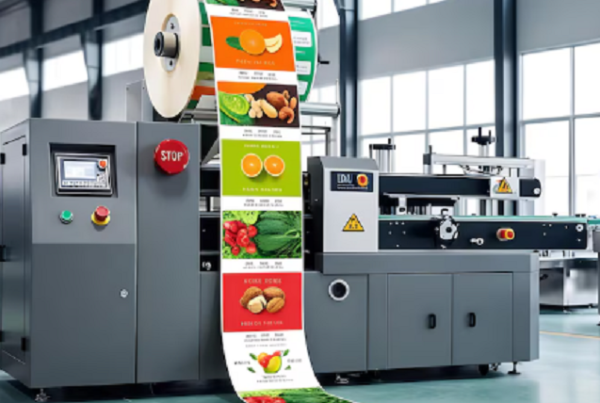
A more technically sophisticated variant where the window position is precisely registered to the print design across every repeat. This allows the transparent window to align exactly with, say, a printed product illustration or ingredient callout – creating a seamless visual effect where the actual product appears within a printed frame.
This format is increasingly used by branded players in premium dry fruit and gourmet spice categories to create differentiated shelf presence.
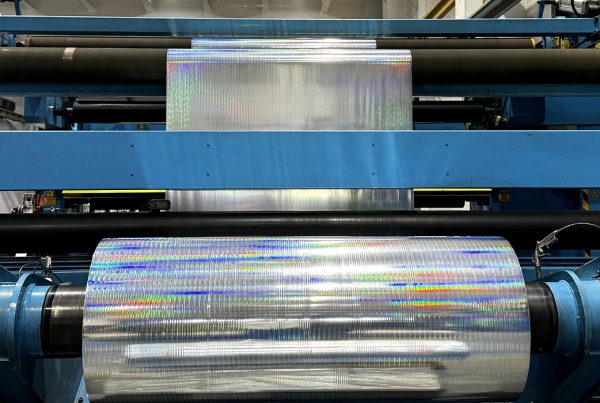
4. Holographic Window Metallised Film
The window de-metallisation is applied on a holographic base film rather than plain metallised film. This delivers both the visual security of holographic effects in the metallised zones and product visibility through the transparent window. Used primarily for premium gifting, branded dry fruits, and anti-counterfeit applications.
Technical Comparison at a Glance
Window metallised CPP is the most affordable option with moderate barrier performance and good sealability. Window metallised PET is mid-range in cost, offers excellent window clarity and stiffness, and has better OTR than VMCPP. Registered window film carries a premium due to plate-making precision, but enables advanced design execution. Holographic window film is the most expensive but offers both anti-counterfeit properties and premium aesthetics.
What Buyers Must Specify When Ordering
Window Dimensions and Shape
Define the window size in millimetres (width × height). Non-rectangular windows (oval, arch, custom shape) are possible but add to plate-making cost and minimum order quantity. Confirm whether the window will be centred or offset from the seal area.
Registration Tolerance
For registered window films, specify the acceptable registration tolerance (typically ±1.5mm). Tighter tolerances increase cost and reject rates; looser tolerances may make the design look misaligned on shelf.
OD in Metallised Zones
Specify the optical density in the metallised portion of the film. For light-sensitive products, OD 2.5 minimum is recommended. The window zone should have zero residual metallisation after de-metallisation (confirmed by OD < 0.1 in the window area).
Barrier Requirements
If the laminate must meet a specific OTR or MVTR target, specify this at the laminate level (not just the film level) and confirm the full laminate structure with your converter.
Compliance Documentation
Request Declaration of Compliance for food contact, particularly if selling through modern retail or export channels where retail buyers require supplier documentation as part of onboarding.
Supplier Evaluation Points
- Can the supplier produce registered window films with consistent registration across a full production run? Ask for defect rate data from previous runs.
- What is the minimum order quantity for window metallised film? Standard MOQ varies from 500 kg to 2,000 kg depending on the window design complexity.
- What is the lead time from artwork approval to film dispatch? Window metallised films require resist printing before de-metallisation – add 5–10 days to standard film lead times.
- Can they provide colour-accurate artwork proofing before committing to production plates?
Conclusion
Window metallised films represent one of the most versatile and commercially effective packaging formats available to Indian spice and dry food brands. The right choice depends on your barrier requirements, aesthetic ambitions, budget, and volume. Standard window VMCPP suits most ambient applications. Registered and holographic variants justify their premium cost for brands where shelf differentiation is a strategic priority.
Kanodia India supplies a range of metallised and window de-metallised films for food, spice, and dry fruit packaging – including custom registered window options. Contact our team for sampling and application-specific guidance.