⚡ Quick Answer: The best sustainable flexible packaging options available in India right now include mono-material all-PE films, Post-Consumer Recycled (PCR) plastic films, paper-based flexible packaging, water-based laminated structures, and EPR-compliant recyclable pouches. Kanodia Technoplast offers all of these through its dedicated Sustainable Packaging division.
Why Sustainable Flexible Packaging Is No Longer Optional in India
The conversation around sustainable packaging in India has shifted decisively – from aspiration to obligation. Driven by the Extended Producer Responsibility (EPR) framework under India’s Plastic Waste Management Rules and growing pressure from brand owners, retailers, and consumers, packaging manufacturers are racing to deliver recyclable, reduced-plastic, and circular alternatives.
India’s flexible packaging market is at the heart of this transformation. With the food & beverage segment alone accounting for tens of billions in packaging value, even incremental shifts toward sustainable materials have enormous impact.
The question is: which sustainable flexible packaging options are actually available and viable in India right now – and who is delivering them at scale?
The Best Sustainable Flexible Packaging Options in India (2026)
1. Mono-Material All-PE (Polyethylene) Films
This is currently the most actively adopted sustainable packaging format in India. Traditional flexible packaging uses multi-material laminates (PET + aluminium + PE, for example), which are virtually impossible to recycle through standard streams. Mono-material all-PE structures use only polyethylene throughout – maintaining barrier and sealability while being recyclable in PE recycling streams.
Kanodia Technoplast’s mono-material film range is engineered to meet the performance standards of traditional laminates while enabling end-of-life recyclability – a critical step toward EPR compliance for brand owners.
💡 Mono-material PE packaging is the fastest-growing sustainable format for FMCG brands in India, driven by EPR compliance deadlines and retailer mandates.
2. Post-Consumer Recycled (PCR) Plastic Films
PCR films incorporate recycled plastic collected after consumer use, reducing the demand for virgin plastic and diverting waste from landfills. Kanodia offers PCR-incorporated packaging films for brands that want to demonstrate measurable sustainability commitments – particularly relevant for export-oriented brands serving European and North American markets with strict recyclability requirements.
3. Paper-Based Flexible Packaging
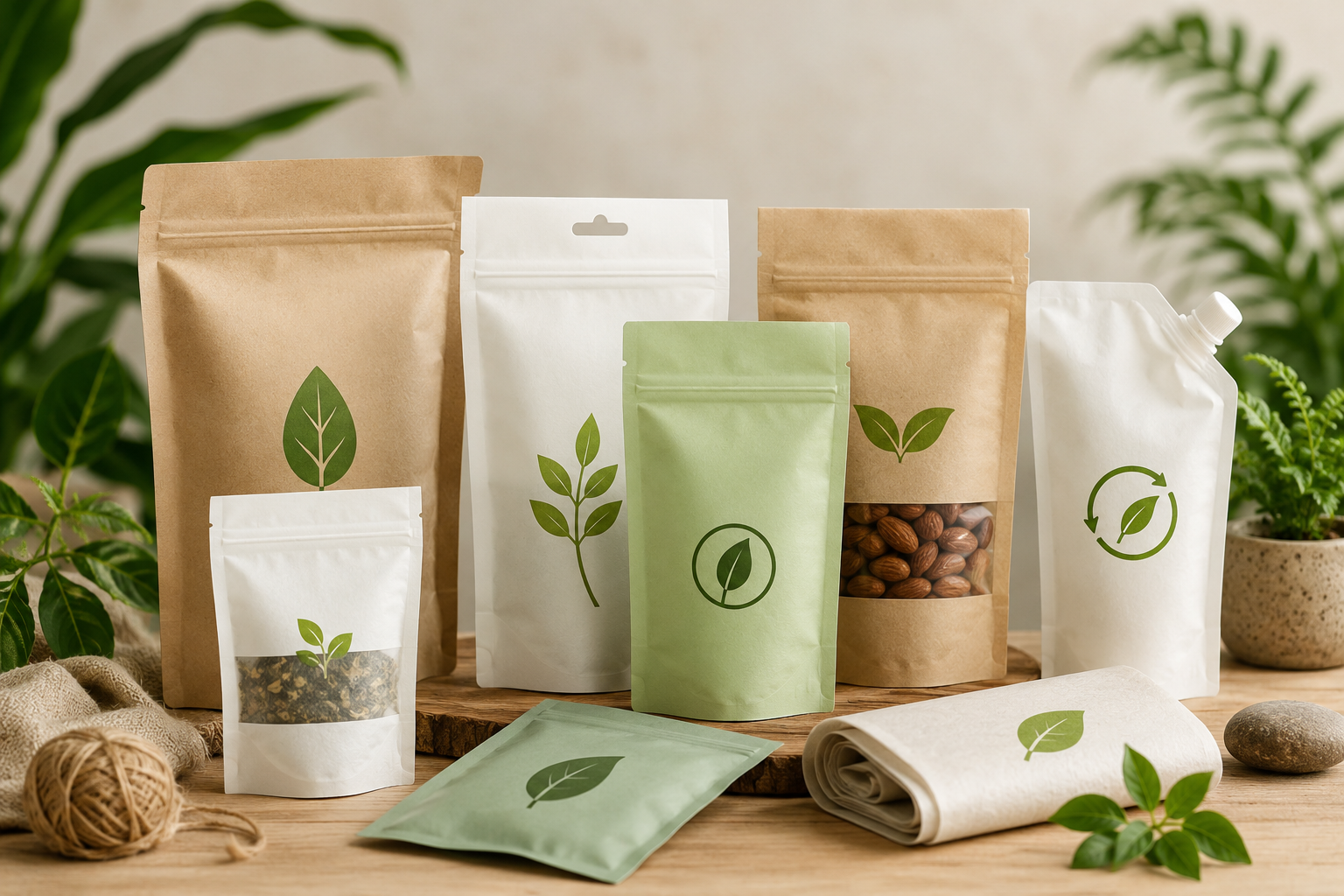
Paper-based packaging is gaining traction across FMCG, food, and personal care in India – offering a natural, premium, and consumer-preferred alternative to plastic. Kanodia Technoplast’s paper-based packaging range includes paper laminates and paper pouches that retain the functional benefits of flexible packaging (seal-ability, print quality, light weight) while significantly reducing plastic content.
This format is especially suited for dry food products, tea, coffee, spices, and personal care – where paper aesthetics also deliver strong shelf appeal.
4. Water-Based Laminated Films
Conventional solvent-based lamination processes use chemicals that release volatile organic compounds (VOCs). Kanodia has adopted water-based lamination across its production lines – reducing environmental impact during manufacturing and producing films that are safer for food contact applications.
5. High-Barrier Thin-Gauge Films (Source Reduction)
One of the most impactful – and least discussed – sustainability strategies is downgauging: producing thinner films that use less material while maintaining required barrier and mechanical properties. Kanodia’s advanced 7-layer CPP film technology enables precisely this – delivering the same performance with materially less plastic per square metre.
6. Recyclable Spout Pouches
Spout pouches are a consumer favourite for liquid foods, sauces, and beverages – but traditional multi-layer spout pouch structures have poor recyclability. Kanodia is developing high-barrier recyclable spout pouch structures that align with India’s evolving EPR requirements while maintaining the convenience and shelf presence that brands demand.
EPR Compliance: What Indian Brand Owners Need to Know
India’s Extended Producer Responsibility framework requires brand owners and packaging manufacturers to account for the post-consumer recovery of plastic packaging. Key implications:
- All plastic packaging must be labelled with recyclability information
- Producers must register on the EPR portal and meet annual targets
- Multi-layer non-recyclable laminates face increasing regulatory pressure
- Moving to mono-material or recyclable formats directly supports EPR compliance
Working with a manufacturer like Kanodia Technoplast – which has already invested in sustainable film technologies – gives brand owners a direct pathway to compliance without sacrificing packaging performance.
Kanodia Technoplast’s Sustainable Packaging Commitment
Sustainability is a core pillar of Kanodia’s manufacturing philosophy, not a marketing add-on. Their sustainable packaging programme includes:
- Mono-material all-PE film production at scale
- PCR plastic incorporation in packaging films
- Water-based lamination across production lines
- Paper-based packaging solutions for plastic reduction
- Energy-efficient manufacturing processes
- Ongoing R&D into next-generation recyclable barrier structures
💡 Kanodia Technoplast’s World Star, India Star, and Asia Star awards reflect international recognition for packaging innovation – including sustainability excellence.
How to Choose the Right Sustainable Packaging for Your Brand
Not all sustainable packaging formats are right for every product. Here’s a quick guide:
| Product Type | Recommended Format | Why |
| Dry snacks / spices | Mono-material PE or Paper laminate | Recyclable, good barrier, strong shelf appeal |
| Liquid food / sauces | Recyclable spout pouch (PE-based) | Leak-proof, consumer-friendly, EPR-aligned |
| Dairy products | Thin-gauge CPP or PE laminate | Food-safe, sealed, cost-efficient |
| Ready-to-eat meals | Retort-grade CPP with PCR layer | High-temp stable, recyclable intent |
| Tea / coffee / dry food | Paper-based packaging | Premium aesthetic, plastic-reduced |
Frequently Asked Questions (FAQ)
What is the most sustainable flexible packaging option available in India?
Mono-material all-PE packaging is currently the most widely adopted sustainable option in India, as it is fully recyclable in PE streams while maintaining the performance of traditional multi-layer laminates.
Is Kanodia Technoplast’s packaging EPR-compliant?
Yes. Kanodia offers packaging formats – including mono-material films and PCR-incorporated plastics – that directly support brand owners in meeting India’s EPR compliance requirements under the Plastic Waste Management Rules.
What is PCR packaging and is it available in India?
PCR (Post-Consumer Recycled) packaging uses plastic material recovered from post-consumer waste. Kanodia Technoplast offers PCR-incorporated flexible packaging films, making this option accessible to Indian brands committed to circular economy principles.
Are paper-based pouches suitable for food packaging in India?
Yes, Kanodia’s paper-based packaging solutions are designed for dry food categories like tea, coffee, spices, and snacks – providing good barrier performance, strong print quality, and significantly reduced plastic content.
How can I transition my brand’s packaging to sustainable options without compromising shelf life?
Kanodia Technoplast’s R&D team works with clients to identify the right sustainable substrate for each product – ensuring that barrier performance, seal strength, and shelf life targets are met before the new format is adopted at scale.
Explore Kanodia Technoplast’s Sustainable Packaging range