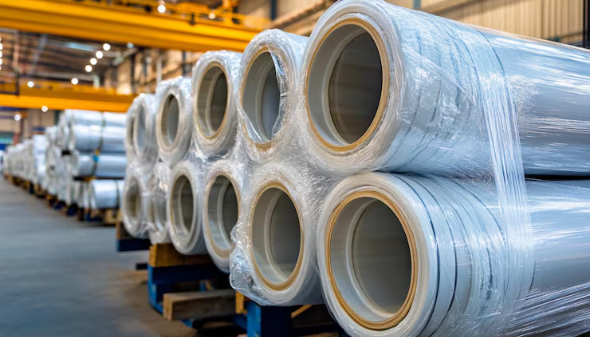

A roll of CPP film looks simple. It is clear or white, glossy, and soft to the touch. Yet two rolls with similar thickness can behave very differently on a laminator or a form-fill-seal machine. One seals cleanly at a low temperature, while the other needs more heat, slows the line and leaves weak seals. That difference is why buyers need a method for assessing CPP film suppliers, not just a price comparison.
This guide explains what CPP film is, where it is used, how to read a specification sheet, and how to run a supplier trial that tells you something useful.
What Is CPP Film?
CPP stands for cast polypropylene. It is a plastic film made by melting polypropylene, pushing it through a flat die and cooling it quickly on a chilled roll. Unlike biaxially oriented polypropylene (BOPP), it is not stretched in two directions after casting. The result is a film that is generally softer and more flexible, with good clarity and strong heat-sealing behaviour.
Because of those traits, CPP is widely used as a sealant layer in laminates and as a base for metallising. Trade coverage of the process, including a PlasticsToday article on cast PP, describes how die design and chill-roll contact influence gloss and haze. That article dates from 2008, so use it for the process, not for market figures.
Where CPP Film Is Used
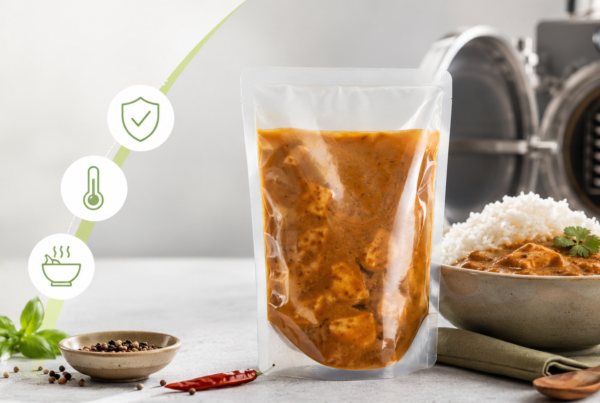
CPP appears in many everyday packs. Snack and confectionery wrappers use it for seal reliability and appearance. Medical and pharmaceutical packs use it where sealing and cleanliness matter. Lamination films, labels and retort packaging also use CPP in suitable grades.
In a typical laminate, CPP sits on the inside as the layer that seals to itself. A PET or BOPP layer on the outside carries the print and adds stiffness. This division of work is one reason CPP and BOPP are better seen as partners than as rivals, and neither is the right answer for every pack.
CPP Variants and Grade Families
Buyers often say “CPP” as if it were a single product. In practice, grades are built for different jobs. General-purpose grades suit everyday lamination and wrapping. Metallising grades are formulated so the film accepts a thin metal layer cleanly. Retort grades are designed for packs that face heat processing, and pharma-oriented grades are chosen where documentation and cleanliness expectations are higher.
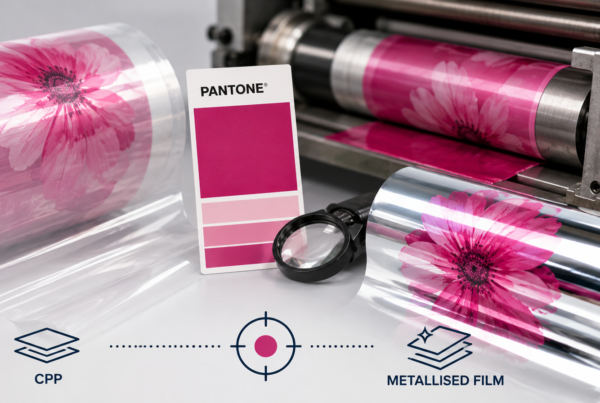
Colour matters too. A transparent film shows the product, a metallised film adds barrier and a reflective look, and a white opaque film offers a solid background for graphics. Ask each supplier which families it produces routinely. A wide range may serve several of your products, but the grade you need must still be proven on your own application.
How to Read a CPP Specification Sheet
A good supplier shares a technical data sheet without being pushed. Look for these items and ask what test method sits behind each number.
Thickness and tolerance. Nominal gauge matters less than how tightly it holds across the roll width and between rolls. Poor tolerance causes wrinkles, tension problems and uneven seals.
Seal initiation temperature and seal strength. These show how readily the film seals and how strong the seal becomes. Ask how they were measured, because different methods give different values.
Hot tack. This describes seal strength immediately after sealing, while the seal is still warm. It matters on vertical machines where product drops into a seal moments after it forms.
Coefficient of friction. Slip properties decide how the film runs over rollers and forming collars. Too little slip drags, while too much slip can cause web wandering.
Optical properties. Haze and gloss matter if the pack must show the product or carry premium graphics.
Surface treatment level. Treatment helps inks and adhesives anchor to the film. Ask when the treatment was applied and how it holds over shelf time.
A data sheet is a starting point. It describes typical values, not a guarantee for every roll, so ask how the supplier controls batch variation.
Running a Supplier Trial That Means Something
Many failed purchases begin with a sample that was never tested properly. Use a simple protocol.
First, state the use case. Tell the supplier your machine type, line speed, sealing temperature range, lamination partner and product. Without this, you receive a generic sample.
Second, run the film on your own equipment. Record seal strength, appearance, breaks, and the temperature window in which sealing is reliable. A wider window gives you more tolerance for day-to-day variation.
Third, test more than one lot. A single good sample shows capability, while repeat lots show consistency.
Fourth, check ageing. Laminate or seal samples again after a few weeks to see whether bond strength or appearance changes.
Procurement Considerations Beyond the Film Itself
Suppliers differ in how they support the commercial side of CPP buying. Clarify these points early.
Grade availability matters because general-purpose, metallising, retort and pharma applications need different formulations. Ask which grades are produced regularly and which are made on request. Check roll widths, core sizes and winding quality, since they affect your slitters and unwinds. Storage and shelf life guidance should be explicit, as CPP surface treatment and slip additives can change with time.
Then discuss lead time, minimum order quantity and packing. A supplier that publishes its dispatch assumptions is easier to plan around than one that promises “fast delivery” in general terms.
Common Mistakes When Buying CPP Film
The first mistake is specifying only thickness. Gauge alone says little about sealing, slip or treatment. The second is approving a grade from lab data without a line trial. The third is ignoring downstream steps: a film that seals well may still cause printing or lamination problems if the surface treatment is wrong.
Another frequent error is comparing prices across different grades or tolerances. A lower rate may reflect a looser specification. Finally, some buyers fail to define an acceptance standard, so disputes arise when the first complaint appears. Agree in advance what you will measure and which values count as acceptable.
Kanodia India as a CPP Film Manufacturer in India: What the Website Says
Kanodia Technoplast presents its CPP business on the kanodiaindia.com website. It describes a 7-layer CPP film plant and calls itself India’s largest CPP film manufacturer. That is the company’s own claim, and buyers should confirm it against their own requirements.
Its CPP page lists three variants: transparent, metallised and white opaque. It describes the film as having high clarity and gloss, surface treatment for ink and adhesive anchoring, smooth machinability and low static build-up. It also states a seal initiation temperature down to 90 degrees Celsius and seal strength up to 1 kg. Treat these as manufacturer-stated figures and ask for the test conditions behind them. The page lists applications such as snack packaging, confectionery wraps, medical packaging, labels, lamination films and retort packaging.
Two related pages are worth reading. The vacuum metallised films page describes metallising on BOPET, BOPP and CPP substrates, and the laminated films page shows structures where such films may be used. If you need a deeper technical review of seal performance and gauge, the company’s own article on how converters should evaluate CPP film covers that topic.
The website does not publish a full thickness range or detailed grade datasheets on the CPP page, so request those directly.
Choosing Among CPP Film Suppliers: The Short Version
Reliable CPP film suppliers share data openly, ask about your machine and application, support trials, and show consistency across lots. Start with your use case, read the specification sheet critically, test on your own line, and compare total performance instead of price per kilogram.
If you are evaluating CPP film for snack, confectionery, medical, lamination or retort applications, review the Kanodia India CPP page and email info@kanodiaindia.com with your application, machine details and required grade.
REFERENCE LINKS
| Relevant page or resource | Why it is relevant | Verified URL |
| Kanodia India: 7-Layer CPP Film Plant | Company-stated CPP variants, properties and applications (manufacturer claims) | https://kanodiaindia.com/packaging-films/7-layer-cpp-film-plant/ |
| Kanodia India: CPP Film Manufacturer evaluation guide | The company’s own technical guide on seal performance, gauge and grades | https://kanodiaindia.com/blog/cpp-film-manufacturer-how-converters-should-evaluate-seal-performance-gauge-and-grades/ |
| PlasticsToday: Cast PP gaining ground (2008) | Independent trade coverage of cast PP processing and properties; dated, so use for process only | https://www.plasticstoday.com/plastics-processing/cast-pp-gaining-ground-lower-initial-investment-offers-processors-advantages |
| Kanodia India: Vacuum Metallised Films | Company-stated metallising on BOPET, BOPP and CPP | https://kanodiaindia.com/packaging-films/vacuum-metallizer-films/ |
FREQUENTLY ASKED QUESTIONS
What is CPP film?
CPP is cast polypropylene film, made by extruding polypropylene through a flat die and cooling it on a chilled roll. It is generally soft, clear and strongly heat-sealable.
What is CPP film used for?
It is commonly used as a sealant layer in laminates, as a base for metallising, and in snack, confectionery, medical and retort packaging. The right grade depends on the application.
How is CPP different from BOPP?
CPP is cast and not stretched after extrusion, so it is usually softer and seals more readily. BOPP is stretched in two directions and is generally stiffer, but performance depends on the grade.
What should a CPP technical data sheet include?
It should list thickness and tolerance, seal initiation temperature, seal strength, hot tack, friction, optical properties and surface treatment. Ask which test methods were used for each value.
How should I trial CPP film from a new supplier?
Run it on your own machine with your real product, test more than one lot, and record the temperature range in which seals stay reliable. Check samples again after a few weeks to see whether they change.
Why does surface treatment matter for CPP film?
Treatment improves how well inks, coatings and adhesives bond to the film. Poor or faded treatment can cause print and lamination problems.
Does Kanodia India manufacture CPP film?
Its website describes a 7-layer CPP film plant and lists transparent, metallised and white opaque variants. Contact the team for grade availability and technical documentation.