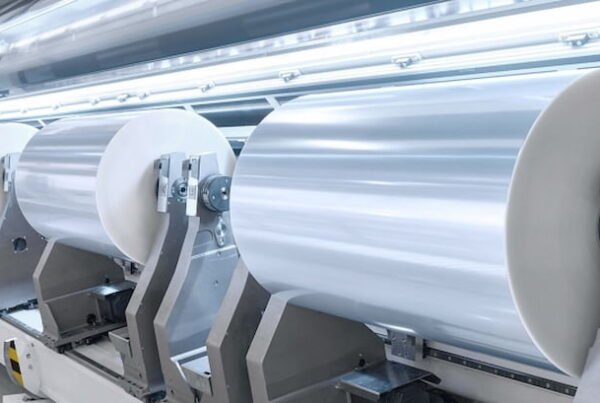
India’s metallised film market is crowded. A quick search on any B2B portal returns dozens of suppliers offering vacuum metallised CPP, PET, and BOPP films at competitive prices. But behind that apparent abundance lies enormous quality variation – in optical density, metal bond strength, barrier performance, and consistency between rolls.
Placing a trial order without a structured evaluation process wastes time and money, and worse, can lead to production downtime when inferior film reaches your converting line. This guide gives you a practical, technical checklist to run before you commit to any metallised film supplier in India.
Understanding What ‘Metallised Film’ Actually Means
Metallisation is the process of depositing an ultra-thin layer of aluminium (typically 20–40 nanometres thick) onto a plastic film substrate under high vacuum. This thin layer provides:
- A reflective, premium metallic appearance
- Significant improvement in oxygen and moisture barrier (OTR reduction of 50x or more over unmetallised film)
- Light barrier properties that protect UV-sensitive products
- Improved aroma and flavour retention for food applications
The base substrate can be CPP, PET (polyester), or BOPP. Each has different physical properties and is suited to different applications – your choice of base film is as important as the metallisation quality itself.
The 10-Point Technical Checklist
1. Optical Density (OD)
OD is the most fundamental measurement of metallisation quality. It measures how much light the aluminium layer blocks. Standard OD values range from 2.0 to 3.0, with higher values indicating denser, more uniform metallisation. For premium snack and confectionery packaging, OD of 2.4–2.8 is typical. For light-sensitive pharmaceuticals, 3.0+ may be required. Ask the supplier for OD test certificates – and specify the OD range in your purchase order.
2. Metal Bond Strength
Metal bond strength (also called adhesion or peel strength) measures how firmly the aluminium layer adheres to the base film. Poor bond strength causes metal transfer during lamination, printing, or end-use – visually appearing as silvery deposits on the adhesive layer or ghosting in printed areas. Minimum acceptable metal bond strength is typically 150 mN/15mm (cross-direction), measured by adhesive tape peel test per ASTM D903. Ask for this data in the CoA.
3. OTR and MVTR After Metallisation
Request post-metallisation barrier data, not just substrate data. A film with OD 2.5 and poor barrier (OTR >10 cc/m²/day) is useless for moisture-sensitive snacks. Typical metallised CPP targets OTR below 5 cc/m²/day and MVTR below 1 g/m²/day. For high-barrier applications, ask for metallised structures delivering OTR below 1 cc/m²/day.
4. Pinholes and Surface Defects
Pinholes – microscopic holes in the aluminium layer – compromise barrier and visual uniformity. A quality metallised film should have zero pinholes visible to the naked eye under standard light inspection. Ask about the supplier’s pinhole inspection process (automated optical inspection is the standard for serious manufacturers).
5. Surface Tension / Wettability
Metallised film must have adequate surface energy (typically 38–42 dynes/cm for printing and lamination). Insufficient surface tension leads to ink adhesion failure and delamination. Ask whether the film has been corona treated post-metallisation, and confirm the dyne level on the roll.
6. Gauge and Flatness
Thickness variation beyond ±5% causes tension variations on your converting line, leading to wrinkling, misregistration in printing, and uneven lamination. Flatness defects (edge wave, baggy centre) cause web breaks on high-speed equipment. Inspect the first roll visually before running production, and ask for cross-direction gauge profiles.
7. Roll Dimensions and Core Specs
Confirm width tolerance (±1mm for precision converting), roll diameter, core size (3-inch or 6-inch), and winding tension. Incorrect core size or excessive winding tension causes set-in curl that creates feeding problems on your equipment.
8. Age of Stock
Metallised films degrade with age – particularly metal bond strength and surface tension. Always ask for manufacturing date and confirm the film is less than 6 months old. For critical applications, request fresh production rather than warehouse stock.
9. Substrate and Resin Declaration
Know what you are buying. Ask for the base resin type, whether the film contains slip additives, anti-block additives, or UV stabilisers that could interfere with your lamination adhesive or ink system. This is especially important when switching between suppliers – identical-looking films can have incompatible additive packages.
10. Regulatory Compliance for Your Application
For food-contact applications, request a Declaration of Compliance referencing FSSAI, BIS, or FDA/EU standards as applicable. For pharma, this is mandatory. For industrial applications, confirm the film is free of restricted substances (REACH, RoHS if exporting to EU).
Commercial Due Diligence Before Placing a Trial Order
Technical specifications alone are not enough. Commercial reliability separates good suppliers from great ones:
- Manufacturing vs. trading: Verify you are dealing with a manufacturer, not a trader re-rolling or relabelling another plant’s material. Ask for a facility visit or video call showing the metallisation chamber.
- Production capacity: A supplier whose entire capacity is committed to one customer cannot reliably serve you during peak demand. Ask about monthly production volumes and typical order lead times.
- Quality management system: ISO 9001 certification indicates documented processes. Ask specifically about incoming resin testing, in-process quality checks, and final roll inspection procedures.
- Trial order terms: A confident supplier will offer a trial roll (50–100 kg) at commercial pricing without requiring a large minimum commitment. Insisting on high MOQ for a first order is a red flag.
- Complaint handling: Ask how they handle quality complaints – do they replace the material, investigate the root cause, and issue a corrective action report? This tells you how the relationship will work when things go wrong.
Red Flags to Watch For
- Supplier cannot provide OD, OTR, and metal bond strength data in a CoA format
- Film price is significantly below market – metallisation is a capital-intensive process; unsustainably low prices indicate quality compromise somewhere
- Rolls have inconsistent widths, visible splice marks, or poor edge trim – signs of process control problems
- No Declaration of Compliance available for food or pharma contact applications
- Delivery timelines are vague or inconsistent with your production planning needs
Conclusion
Sourcing metallised film in India requires a structured approach – not just a price comparison. The 10-point technical checklist and commercial due diligence framework above will help you identify suppliers who can deliver consistent quality, reliable supply, and the documentation your quality system requires.
Kanodia India supplies vacuum metallised CPP and holographic films with full technical documentation, in-house quality testing, and flexible trial order terms. Talk to our team to request a sample and technical data sheet for your specific application.