Picking a packaging supplier is rarely a one-time decision. A film that runs smoothly on your lines today must behave the same way six months from now, and a pouch that looks good on the shelf must also survive transport and storage. That is why the search for the best flexible packaging company in India should begin with your product and process, not with a price list.
This guide sets out the factors Indian B2B buyers can use to compare suppliers, the questions worth asking, and the mistakes that cause trouble later. It also explains where Kanodia India fits, using information published on its website.
What Makes a Flexible Packaging Company Suitable for Long-Term Partnerships?
A good partner does more than dispatch rolls on time. It understands how your product behaves, helps you select a structure, and delivers the same quality on the tenth order as on the first. For FMCG brands, converters and procurement teams, three things matter most: technical fit, consistency and communication.
A supplier that performs well on all three reduces rework, line stoppages and wastage. Those costs usually outweigh any small saving on the per-kilogram rate.
Three Examples of How Requirements Shape the Choice
Abstract criteria become clearer with real packs. Consider three typical cases.
A namkeen brand needs protection from moisture, light and oxygen, plus a clean print for shelf appeal. A structure with a metallised layer is a common starting point, and the supplier should be able to discuss seal behaviour on your form-fill-seal machine, not only the film’s barrier values.
A liquid detergent or edible oil pouch faces a different risk. The pack must resist leaks, pressure during handling and chemical contact from the product, so seal strength and structure matter more than clarity.
A pharmaceutical sachet raises documentation and cleanliness questions. The buyer will want consistent specifications, traceable batches and a supplier that understands regulatory expectations for the application.
In each case, the right supplier is the one that asks the right questions first.
Key Factors to Assess in a Flexible Packaging Manufacturer in India
1. Product suitability and application fit
Start with what you are packing. Dry snacks, edible oils, pharmaceutical sachets, detergent powders and lubricants each need different protection. List your product’s sensitivity to moisture, oxygen, light, grease and puncture, then ask which structure suits it.
Common laminates include BOPP/PE for dry foods, metallised PET/PE for chips and spices, and paper/PE for staples such as sugar and flour. A supplier who asks detailed questions about your product is often a better sign than one who quotes immediately.
2. Film properties and packaging performance
Check clarity, stiffness, barrier performance, gauge and seal strength. Ask for technical data sheets and test reports instead of relying on brochure language. For barrier needs, compare measured oxygen and moisture vapour transmission values for the exact structure you plan to use.
3. Printability, sealing and lamination compatibility
A film must print well, laminate cleanly and seal reliably at your line speed. Ask about surface treatment, ink and adhesive compatibility, the number of printing colours, and registration accuracy. Suppliers that manage cylinders, inks, lamination and conversion under one roof often coordinate these steps more easily, because fewer hand-offs mean fewer chances for mismatches.
4. Quality consistency across repeat orders
Ask how the supplier controls variation between batches. Useful signals include batch-wise testing, traceability, retained samples and documented checks for seal strength, delamination and print quality. Request trial runs across two or three lots, not just one.
5. Technical support and product selection
Technical consultation should be part of the service. The supplier should help you choose structure, thickness and finish, support trials on your machines, and respond quickly when a problem appears.
6. Supply reliability, communication and commercial terms
Clarify lead times, minimum order quantities, sampling timelines and dispatch practices. Clear, prompt communication during the enquiry stage often previews service after the order. Compare total cost, including wastage, line efficiency and rejections, rather than the unit rate alone.
7. Sustainability and recyclable options
EPR requirements and brand commitments are pushing buyers toward mono-material structures, recycled content and lighter packs. Ask suppliers what they actually offer, which applications each option suits, and whether barrier performance holds up.
Questions Procurement Teams Should Ask Before Choosing a Supplier
- Which film structure do you recommend for my product, and why?
- Can you share technical data sheets and test reports for this structure?
- How do you control batch-to-batch consistency?
- What are your sampling timelines and minimum order quantities?
- Which steps do you handle in-house, and which are outsourced?
- How do you support trials and complaints?
- What recyclable or lower-material options exist for this application?
Common Mistakes When Evaluating Packaging Manufacturers
- Choosing on price alone. A cheaper film that causes seal failures or stoppages costs more in the end.
- Mis-specifying barrier. Extra layers add cost, while too few shorten shelf life.
- Skipping trials. Lab data helps, but your machines and your product are the real test.
- Judging a single sample. Check several batches before committing volumes.
- Ignoring support until trouble starts. Responsiveness is easier to test early.
- Treating sustainability as a label. Verify the structure, recyclability and performance behind the claim.
How to Compare Suppliers Using Actual Requirements
Build a simple scorecard before requesting quotes. List your product’s needs, such as barrier, seal, print quality, line speed, shelf life and regulatory expectations, and weight each by importance. Then score every supplier on technical fit, evidence of consistency, support, lead time and total cost.
Price becomes one line in the scorecard instead of the deciding factor. A converter running high-speed lines might give seal consistency the heaviest weight, while a brand launching a premium pack might weight print quality and appearance more. The weights will differ from buyer to buyer, and that is the point. The method also makes the final decision easier to explain to your finance and operations teams, because every score traces back to a stated requirement.
Kanodia India’s Products and Where They May Fit
Kanodia India, the website brand of Kanodia Technoplast, states that it has served India’s flexible packaging industry since 1995. It also describes itself as India’s largest CPP film manufacturer. Treat such statements as a starting point and confirm suitability through samples, trials and technical discussion. The product pages list the following lines:
- Packaging films: 7-layer CPP films, vacuum metallised films, blown PE films, high-security holographic films, window metallised films and gift wraps. The site lists uses in snacks, dairy, pharma, soap and detergent, and beverages.
- Laminated films: Structures such as BOPP/PE, PET/PE, metallised PET/PE and paper/PE, with gravure and flexo printing, aimed at food, pharma and industrial applications.
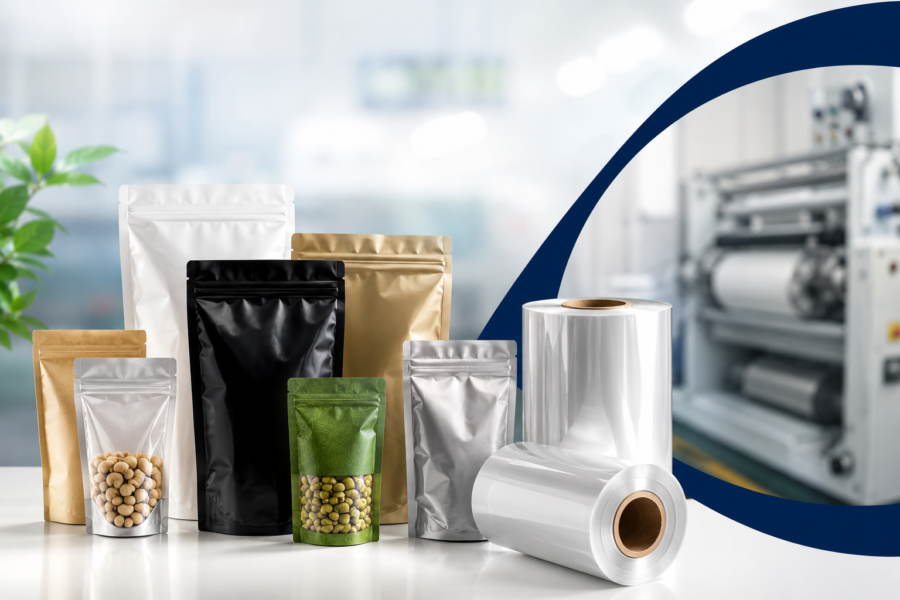
- Pre-formed pouches: Stand-up, shaped, quad seal and resealable pouches, plus spout packaging for liquids such as sauces and hand wash.
- Sustainable packaging: PCR plastic films, mono-polymer laminates and mass reduction through optimised pack design.
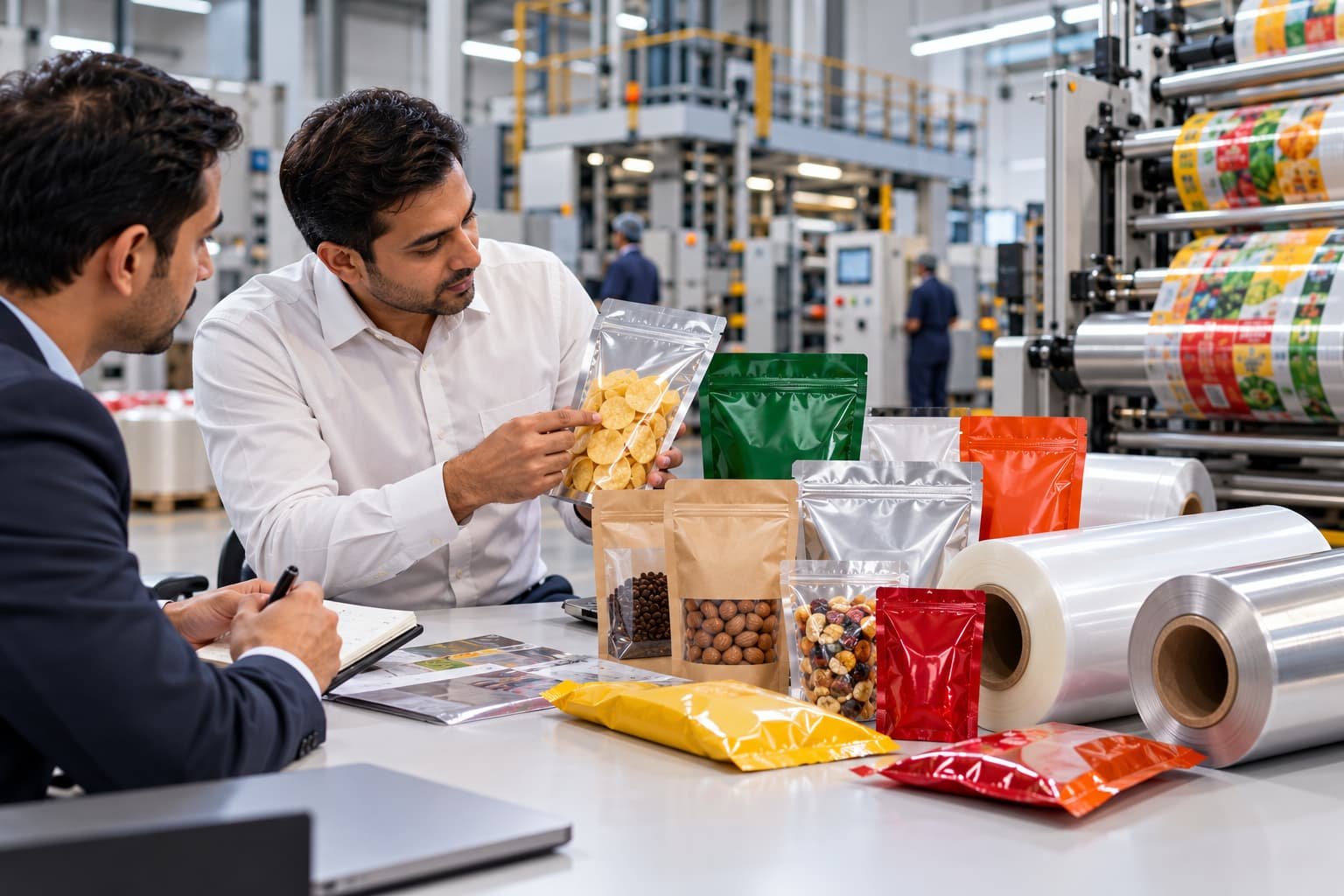
The company also lists rotogravure cylinders, inks and adhesives, paper cores and tubes, and paper-based packaging. For a converter, that range means film, printing components and finished formats can be discussed with one supplier. For an FMCG brand, it means a single technical conversation can cover structure, printing and pouch format. Ask the team for technical data sheets and samples for your shortlisted structures, and compare them with the same checklist you apply to every other supplier.
Choosing the Best Flexible Packaging Company in India: The Bottom Line
No supplier is the right answer for every product. The best flexible packaging company in India for your business is the one whose films, print capability, support and consistency match your application, and who can prove it through data and trials. Define your requirements first, score suppliers against them, and treat price as one input among several.
If your packaging needs involve films, laminates, pouches or sustainable options, explore the relevant Kanodia India product pages linked above. You can also email info@kanodiaindia.com with your product, barrier needs and quantity to start a product-related enquiry.
REFERENCE LINKS
| Relevant page or resource | Why it is relevant | Verified URL |
| Packaging Films | Lists the CPP, metallised, blown PE, holographic and window metallised films discussed above | https://kanodiaindia.com/packaging-films/ |
| Laminated Films | Shows laminate structures, printing options and target industries | https://kanodiaindia.com/laminated-films/ |
| Sustainable Packaging | Describes PCR films, mono-polymer laminates and mass reduction | https://kanodiaindia.com/sustainable-packaging/ |
| About Kanodia Technoplast | Company background, divisions and product range | https://kanodiaindia.com/about-us/ |
FREQUENTLY ASKED QUESTIONS
What should I look for in a flexible packaging manufacturer in India?
Look for application fit, consistent batch quality, technical support and reliable supply. Request samples, test data and trial runs before committing volumes.
Which flexible packaging materials are most common?
Common materials include BOPP, PET, PE, CPP, nylon, metallised films and aluminium foil, often combined as laminates. The right mix depends on the barrier, sealing and printing needs of your product.
How do I choose the right film structure for my product?
Define sensitivity to moisture, oxygen, light and puncture, along with shelf life and line speed. Then ask the supplier to recommend structures and validate them through trials.
Why is price alone a poor basis for choosing a packaging supplier?
Low prices can hide higher wastage, seal failures and inconsistent batches. Total cost, including line efficiency and rejections, gives a truer picture.
How can I check quality consistency across orders?
Ask for batch-wise test reports on seal strength, delamination and print quality, and compare several lots. Traceability and retained samples also help.
Does Kanodia India offer films, laminates and pouches?
Yes, its website lists packaging films, laminated films, pre-formed pouches and spout pouch packaging, among other products. Share your requirements with the team to confirm suitability.
Are recyclable flexible packaging options available?
Yes, options such as mono-material structures and recycled-content films exist, though suitability varies by application. Kanodia India lists PCR films and mono-polymer laminates on its sustainable packaging page.