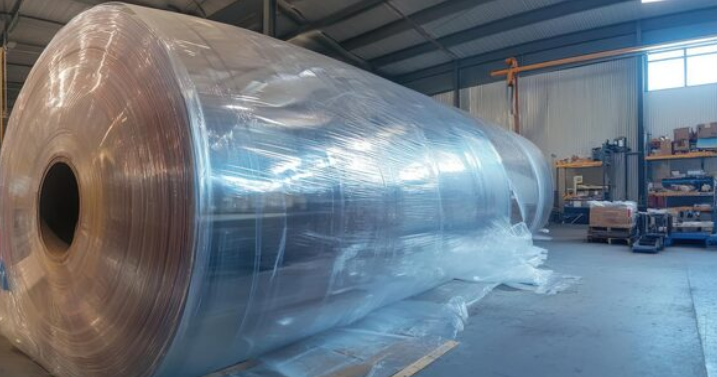
How South India’s most dynamic industrial corridor is setting new benchmarks in flexible packaging performance, compliance, and innovation.
Bangalore has grown far beyond its identity as India’s technology capital. Today, the city and its surrounding industrial corridors anchor a thriving ecosystem of food processing, FMCG manufacturing, pharmaceuticals, and consumer goods production. As these industries scale, the demand for advanced, reliable, and compliant packaging solutions has intensified making the decision to partner with the right flexible packaging film manufacturer in Bangalore one of the most consequential supply chain choices a business can make.
Flexible packaging films are not passive materials. They are precision-engineered barriers that determine product freshness, safety, shelf life, and brand presentation. For procurement heads, packaging technologists, and operations directors sourcing for South Indian manufacturing facilities, understanding what separates a high-performance packaging partner from a commodity supplier is essential to protecting product quality and business continuity.
₹22K Cr
India flexible packaging industry annual value
14%
CAGR of South India FMCG packaging demand
70%
Of packaged goods rely on multilayer flexible films
3x
Shelf life extension possible with barrier film structures
Why Bangalore Is a Strategic Hub for Packaging Procurement
Karnataka’s industrial policy has consistently positioned Bangalore and its satellite zones — Tumkur, Dobbaspet, Peenya, and Bidadi as preferred destinations for food processing and consumer goods manufacturing. This concentration of production activity has created a parallel demand surge for packaging inputs, particularly flexible films used in snack foods, dairy, beverages, personal care, and pharmaceutical products.
For businesses operating manufacturing plants in and around the region, sourcing from a flexible packaging film manufacturer in Bangalore delivers distinct advantages: compressed lead times, reduced freight costs, easier quality audits, and closer collaboration on film development. In high-volume FMCG production environments, these operational efficiencies translate directly into cost reduction and supply chain resilience.
The Bangalore Manufacturing Advantage
South India’s industrial corridors host over 4,000 registered food processing units. Proximity to a technically capable packaging film partner reduces procurement risk, improves responsiveness to specification changes, and enables faster new product launch cycles a critical competitive edge in fast-moving consumer markets.
The Engineering Behind Quality, Durability, and Safety
The three pillars of packaging film performance quality, durability, and safety are not marketing language. They are measurable, testable, and certifiable engineering outcomes that define whether a film is fit for its intended application. Every serious manufacturer must be able to demonstrate performance against each dimension with documented data.
Quality in flexible packaging films is expressed through dimensional consistency, optical clarity, surface uniformity, and print receptivity. Variations in thickness, haze levels, or surface energy directly impact printing registration, lamination adhesion, and consumer perception. A quality-driven manufacturer maintains tight tolerances across all production parameters, batch after batch.
Durability refers to the film’s mechanical performance under real-world conditions — tensile strength, elongation at break, puncture resistance, and seal integrity across temperature ranges. Films destined for frozen food applications, retort processing, or high-speed form-fill-seal lines must be engineered to withstand physical stresses without failure.
Safety is the most non-negotiable dimension. Food-contact films must be manufactured from virgin, food-approved resins, tested for extractable and migratory substances, and produced in environments that prevent contamination. Compliance with FSSAI regulations, BIS standards, and applicable international food contact guidelines is the baseline expectation for any credible packaging partner.
“In packaging, quality is not what you see it is what you cannot see: the barrier precision, the seal consistency, the migration control that protects every product inside.”
Film Technologies That Power Modern Flexible Packaging
The flexible packaging film landscape encompasses a wide range of material technologies, each optimised for specific performance requirements. Understanding the core film types enables procurement and packaging teams to specify the right structure for every product application.
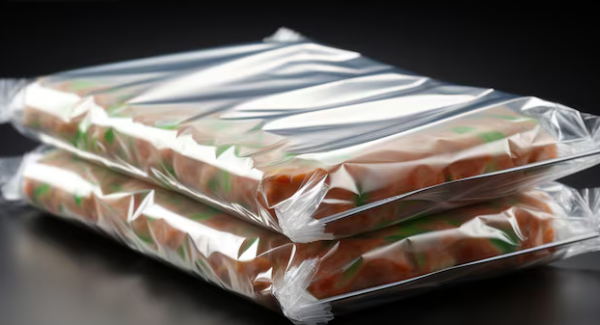
- CPP Films — exceptional heat seal initiation and optical clarity, ideal for snack foods, bakery, and lamination substrates
- Metallised Films — aluminium vapour deposition delivers outstanding oxygen and moisture barriers for extended shelf life
- Blown PE Films — high impact strength and puncture resistance, suited for pouches, bulk wrapping, and industrial applications
- Laminated Structures — multilayer combinations engineered for specific barrier, seal, and print requirements
- BOPP Films — excellent stiffness and surface energy for high-resolution rotogravure print quality
- Holographic Films — visual security and premium aesthetics for brand differentiation and anti-counterfeiting
The selection of film construction must account for product characteristics, processing line speeds, filling conditions, distribution temperature range, and regulatory requirements of the destination market. A manufacturer with deep application engineering capability will guide this specification process rather than simply fulfilling a purchase order for a generic film grade.
Compliance and Certification: The B2B Buyer’s Checklist
For procurement teams, supplier qualification in flexible packaging demands a structured evaluation of compliance documentation. The following certifications and standards define a manufacturing partner capable of meeting the requirements of food, FMCG, and pharmaceutical clients.
🏅ISO 9001 — Quality Management
Confirms a documented, audited quality management system across all production processes and supplier inputs.
🍽️ISO 22000 / FSSC 22000 — Food Safety
Third-party validation that food safety hazards are identified, controlled, and monitored throughout production.
📋FSSAI Compliance
Mandatory for food-contact packaging materials supplied to food businesses operating across India.
♻️EPR Registration
Extended Producer Responsibility compliance, increasingly required by retail partners and export markets.
Kanodia Technoplast: A National Leader Serving Bangalore’s Packaging Needs
When Bangalore’s food processors, FMCG manufacturers, and consumer goods companies require a top flexible packaging film manufacturer with the technical depth to support complex packaging challenges, Kanodia Technoplast stands as one of India’s most trusted names. Established in 1995 with a manufacturing campus in Kundli, Haryana, the company’s national supply network and advanced product portfolio make it a natural partner for procurement teams across South India, including Bangalore.
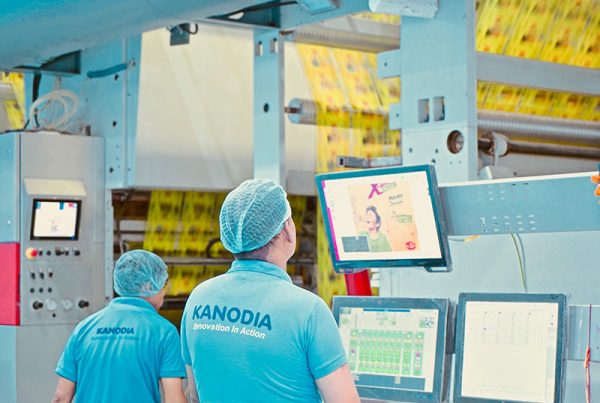
As a top flexible packaging film manufacturer, Kanodia Technoplast’s product range spans CPP films, metallised films, blown PE films, holographic films, laminated structures, pre-formed pouches, and rotogravure printing cylinders offering a single-source packaging solution that eliminates the complexity of managing multiple film suppliers. Their in-house manufacturing integration, from film production and metallisation through to printing and pouch forming, ensures consistent quality standards across every product supplied.
The company’s recognition with international awards including WorldStar, AsiaStar, and IndiaStar packaging awards underscores a sustained commitment to innovation and manufacturing excellence. For B2B buyers in Bangalore requiring a reliable, certified, and technically capable packaging film partner, the company’s proven track record across hundreds of food and FMCG brands positions them as a compelling supply chain choice.
🏆Award-Winning Manufacturing Excellence
Recognition from WorldStar, AsiaStar, and IndiaStar packaging awards reflects a manufacturing culture where innovation, quality, and customer outcomes are pursued at every level from raw material specification to final film dispatch.
Sustainability in Flexible Packaging: What Bangalore Brands Need to Know
India’s Extended Producer Responsibility framework is placing real, measurable obligations on packaging producers and brands. Manufacturers and retailers in Bangalore are increasingly required to demonstrate that their packaging meets recyclability or recoverability targets, with EPR compliance now a standard expectation in retail supply chain agreements and export certifications.
Flexible packaging films that were historically designed as multi-material laminates are being redesigned as recyclable mono-material structures or low-migration water-based laminate formats. The engineering challenge is significant maintaining barrier performance, seal integrity, and print quality while using simplified, recyclable material compositions. Leading manufacturers are investing heavily in this transition, and Bangalore’s procurement community should actively evaluate suppliers on their sustainable packaging roadmap alongside traditional performance metrics.
How to Build a High-Performance Packaging Film Supply Chain
For operations and procurement leaders in Bangalore, building a resilient flexible packaging film supply chain requires more than price negotiation. The following evaluation dimensions should guide supplier selection and ongoing partnership management.
- Technical service capability — application engineering support for film specification and trial management
- Production capacity — buffer capacity to absorb demand surges without lead time extension
- Quality documentation — batch-level COAs, film test reports, and third-party migration certificates
- Customisation capability — bespoke film structures, print-ready surfaces, and lamination options
- Sustainability portfolio — recyclable and PCR film grades available for EPR compliance
- National logistics network — reliable pan-India delivery to Bangalore facilities
A packaging film supplier who consistently performs against each of these dimensions reduces operational risk, supports new product development, and becomes a genuine competitive asset not merely a line item on the procurement dashboard.
Frequently Asked Questions
What makes a flexible packaging film manufacturer in Bangalore the right choice for food and FMCG brands?
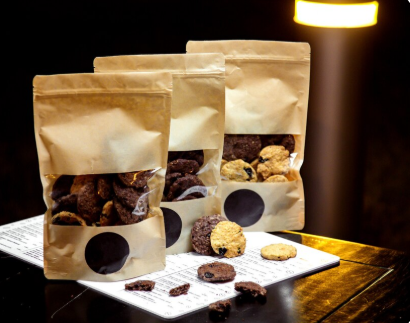
A reliable flexible packaging film manufacturer in Bangalore offers proximity to South India’s major food processing hubs, faster lead times, and deep familiarity with regional compliance requirements. Beyond logistics, the right manufacturer brings advanced multilayer film technology, food-grade certified materials, and the ability to customise structures for specific barrier, seal, and print requirements making them a strategic packaging partner, not just a supplier.
What types of flexible packaging films are most commonly used by FMCG and food manufacturers?
The most commonly used flexible packaging films in FMCG and food manufacturing include Cast Polypropylene (CPP) films for heat-seal applications, metallised films for high barrier and extended shelf life, blown PE films for pouches and wraps, and laminated structures combining multiple layers for superior protection. Each film type is engineered for specific performance parameters including oxygen transmission rate, moisture vapour barrier, tensile strength, and print compatibility.
How do flexible packaging films contribute to longer product shelf life?
Flexible packaging films extend product shelf life through precision-engineered barrier properties that restrict the entry of oxygen, moisture, light, and microorganisms. Multilayer laminate structures combine a high-barrier metallised layer, a printed BOPP layer, and a CPP sealant layer to create a complete protective environment. The result is measurably reduced spoilage, lower product returns, and stronger consumer confidence in product freshness.
What certifications should a top flexible packaging film manufacturer hold for food and pharmaceutical applications?
For food and pharmaceutical applications, a top flexible packaging film manufacturer should hold ISO 9001 for quality management, ISO 22000 or FSSC 22000 for food safety management, and relevant BIS or FSSAI compliance for food contact materials. For pharmaceutical packaging, GMP certification and compliance with Schedule M requirements are essential. These certifications confirm that materials, processes, and quality controls meet international and domestic regulatory standards.
Can flexible packaging films be customised for sustainable and recyclable formats?
Yes. Modern flexible packaging films can be engineered as recyclable mono-material structures, PCR (post-consumer recycled) content films, or water-based laminated formats that reduce environmental footprint. As Extended Producer Responsibility (EPR) regulations in India mandate greater packaging recyclability, leading manufacturers are developing film grades that meet these requirements without compromising barrier performance, seal strength, or print quality.