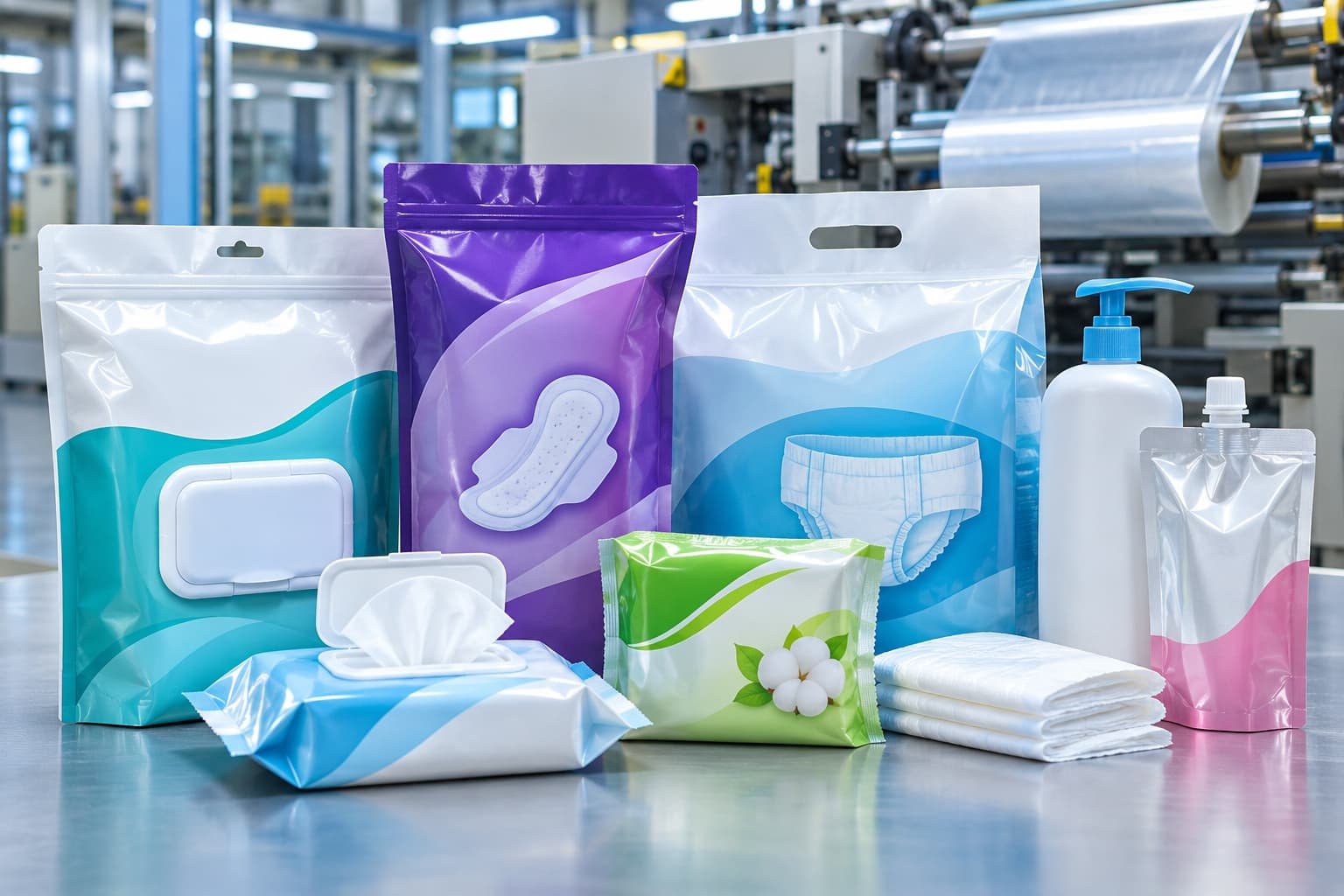
A hygiene product may meet every quality requirement, but unsuitable packaging can still affect its condition during storage, transportation and handling. Businesses searching for hygiene product packaging manufacturers in India need packaging that protects the product while supporting efficient production and a reliable customer experience.
From sanitary products and baby care items to personal hygiene products, packaging requirements vary according to the product, its intended use and the distribution environment.
Choosing the right packaging manufacturer begins with understanding these requirements rather than simply comparing material prices.
Why hygiene product packaging requires careful material selection
Hygiene products often need protection from dust, moisture, handling damage and other environmental factors. The packaging must also support the manufacturer’s production process. A material that protects the product but creates sealing problems or slows down the packaging line may not be a practical choice.
For example, a manufacturer producing individually wrapped hygiene products may prioritise reliable sealing and consistent film dimensions. A business packaging larger quantities for retail distribution may place greater emphasis on packaging strength, print quality and efficient handling. The correct solution depends on the product and the conditions it will experience.
What should hygiene product packaging achieve?
Protection during storage and transportation
Hygiene products may pass through several stages before reaching the customer. Packaging must maintain its integrity throughout these stages. Material selection should consider the product’s sensitivity, storage conditions, transportation distance and expected handling.
Flexible packaging films can provide a protective outer layer when designed for the intended application. However, the required level of protection must be established through product-specific testing.
Reliable sealing
A package is only as dependable as its closure. Weak or inconsistent seals can allow external contaminants to enter and may result in damaged packaging during transportation. Manufacturers should evaluate seal strength, sealing temperature and compatibility with their packaging equipment.
The film must also perform consistently across production batches.
Clear product identification
Packaging often communicates essential product information, including the brand name, product category, quantity and usage instructions. Printed packaging must maintain legibility throughout its intended life. This requires suitable print quality, artwork preparation and compatibility between the packaging material and printing process.
For hygiene brands, clear identification helps customers distinguish between product variants and understand what they are purchasing.
How to choose the right flexible packaging material
There is no single packaging material suitable for every hygiene product. The selection process should begin with the product’s physical characteristics and the manufacturer’s operating requirements.
| Packaging consideration | What the manufacturer should evaluate |
| Product type | Size, shape, sensitivity and intended use |
| Material strength | Resistance to tearing, punctures and handling damage |
| Sealing | Compatibility with the packaging machine and required seal performance |
| Printing | Artwork quality, colour consistency and information legibility |
| Storage | Expected humidity, temperature and storage duration |
| Distribution | Transportation distance, stacking and handling conditions |
A packaging supplier should be able to discuss these factors before recommending a material structure.
Why CPP and PE films matter in hygiene packaging
Cast polypropylene (CPP) and polyethylene (PE) are important materials in flexible packaging. CPP is known for its flexibility and heat-sealing characteristics. PE is widely used in flexible packaging because of its flexibility and sealing capabilities.
Kanodia Technoplast’s website lists CPP and blown PE among its packaging film offerings and identifies hygiene as one of the industries served by its packaging films.
The appropriate material depends on the packaging format, product requirements and manufacturing process. A buyer should not assume that a particular film is suitable simply because it is used for another hygiene product. Material selection must consider the intended application and the complete packaging structure.
The role of printing in hygiene product packaging
Packaging is often the first point of contact between a hygiene brand and its customer. Good printing helps communicate brand identity, differentiate variants and maintain consistent presentation across retail channels.
When evaluating printed packaging, buyers should consider colour consistency across production batches, print clarity and legibility, artwork compatibility with the selected material, resistance to scuffing during handling, and alignment between the printed design and the final packaging format.
Kanodia Technoplast offers packaging films and flexible packaging solutions that include printing and lamination capabilities. Its product range includes CPP, metallised and other specialised films.
How to evaluate hygiene product packaging manufacturers in India
1. Understand the manufacturer’s product range
Check whether the supplier manufactures the packaging material required for your product. A manufacturer with experience across relevant film types may be better positioned to discuss material selection and packaging compatibility.
2. Review manufacturing and quality processes
Ask how the supplier monitors film consistency, printing quality and sealing performance. Request relevant technical documentation and discuss the checks used to evaluate the finished packaging.
3. Conduct production trials
Before approving a new material, test it on the intended packaging equipment. A production trial can help identify issues involving machine handling, sealing, dimensions and product compatibility.
4. Evaluate customisation requirements
Packaging requirements may change according to product size, branding, distribution channel and production volume. Discuss the required dimensions, material structure, print design and expected order quantities before finalising a specification.
How Kanodia Technoplast supports hygiene packaging requirements
Kanodia Technoplast manufactures flexible packaging films and offers packaging solutions for multiple industries, including hygiene. Its packaging films range includes CPP, metallised films, blown PE, holographic films and other specialised film products. The company also offers laminated films and flexible packaging capabilities.
For hygiene product manufacturers, the next step is to identify the product’s packaging requirements and determine which available material is appropriate. Rather than selecting a material based only on its general description, buyers should discuss their application, packaging format, machine requirements and performance expectations with the supplier.
Conclusion
Selecting the right hygiene product packaging manufacturers in India requires a clear understanding of product protection, sealing, printing and manufacturing requirements. A dependable packaging decision begins with the product itself. Buyers should establish the required material performance, verify supplier capabilities and conduct trials before approving packaging for regular production.
Kanodia Technoplast’s packaging films and flexible packaging range provides a starting point for businesses exploring suitable hygiene packaging materials.
CTA: Explore Kanodia Technoplast’s packaging films range at https://kanodiaindia.com/packaging-films/ or contact the company to discuss your hygiene packaging requirements.
Reference Link Table
| Relevant resource | Why it is relevant | Link |
| Packaging Films | Lists packaging film categories and applications | https://kanodiaindia.com/packaging-films/ |
| Products | Provides information about laminated films and packaging capabilities | https://kanodiaindia.com/products/ |
| About Kanodia | Company background and manufacturing overview | https://kanodiaindia.com/about-us/ |
FAQs
What should hygiene product packaging protect against?
It should protect the product against relevant environmental exposure, handling damage and contamination risks during storage and distribution.
Which materials are used for hygiene product packaging?
CPP, PE and laminated flexible packaging materials are used in different applications. The correct choice depends on product requirements.
How do I select a hygiene packaging manufacturer in India?
Evaluate product suitability, manufacturing capabilities, quality controls, customisation options and the supplier’s ability to support production trials.
Why is sealing important in hygiene packaging?
Reliable seals help maintain package integrity and reduce the risk of packaging damage or external contamination.
Can hygiene packaging be customised?
Packaging can be customised according to product dimensions, material requirements, printing and the intended packaging format.
Does Kanodia Technoplast offer hygiene packaging films?
Kanodia Technoplast lists hygiene among the industries served by its packaging films range. Contact the company to discuss the specific material required.