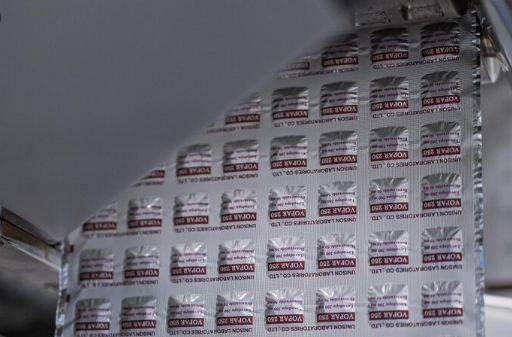
Pharmaceutical packaging is one of the most demanding applications for any flexible film. When CPP film is used in blister pack lidding, sachet packaging, pouch lamination, or tablet strip forming, the stakes are extraordinarily high – product integrity, patient safety, and regulatory compliance all depend on material performance.
This guide is written for procurement managers, packaging technologists, and supply chain leads at pharmaceutical companies sourcing CPP films in India. It covers what the regulations require, what technical specs to prioritise, and how to assess whether a supplier is genuinely equipped for pharma-grade supply.
Why CPP Film Is Used in Pharmaceutical Packaging
CPP film offers a combination of properties that make it attractive for pharma applications:
- Excellent moisture barrier – critical for hygroscopic tablets and capsules
- Wide heat-sealing range – compatible with high-speed sachet and strip packing lines
- High clarity – allows visual inspection of product without opening the pack
- Chemical inertness – low risk of interaction with active pharmaceutical ingredients (APIs)
- Gamma sterilisation compatibility (select grades) – for medical device and sterile pharma applications
- Cost efficiency – competitive with cast PE and EVA alternatives for many applications
Typical pharma applications include unit-dose sachets for oral rehydration salts (ORS), strip packs for tablets, laminated pouches for powder and granule products, and overwrap for secondary packaging.
Key Regulatory Requirements in India
Schedule M – Good Manufacturing Practices
India’s Schedule M under the Drugs and Cosmetics Act mandates that all primary packaging materials used with pharmaceutical products must not react with, absorb, or leach into the product. Suppliers must be able to demonstrate that their CPP film meets these requirements through documented testing.
FSSAI and BIS Standards
For pharmaceutical food supplements and nutraceuticals, FSSAI Packaging Regulations 2018 apply in addition to drug regulations. BIS standards (IS 2508 and IS 10141 for PE-based laminates) provide baseline references for film properties.
FDA 21 CFR 177.1520
For products exported to the US or manufactured for multinational pharma companies, the CPP film must comply with FDA 21 CFR 177.1520, which governs olefin polymers for food and pharmaceutical contact. Request this declaration explicitly from your supplier.
EU Regulation 10/2011
The EU Plastics Regulation specifies migration limits for substances in food and pharma contact materials. If your product is sold in European markets, your CPP film supplier must provide a Declaration of Compliance referencing this regulation along with specific migration test data.
ICH Q1A Stability Guidelines
Pharmaceutical products are subject to accelerated and long-term stability studies. The packaging film is part of the stability submission. This means your CPP film must maintain consistent performance – barrier, seal integrity, visual appearance – over the study period under conditions of 40°C/75% RH (accelerated) and 25°C/60% RH (long-term).
Critical Technical Specifications for Pharma CPP
Moisture Vapour Transmission Rate (MVTR)
MVTR is arguably the single most important parameter for pharma CPP. For moisture-sensitive tablets, typical requirements are MVTR below 5 g/m²/day at 38°C/90% RH. For highly sensitive APIs, combined laminate structures with aluminium foil or EVOH layers supplement CPP’s moisture resistance.
Extractables and Leachables (E&L)
Extractables testing (simulated with organic and aqueous solvents) and leachables testing (with actual product) are increasingly required even for non-sterile oral solid dose packaging. Ensure your supplier can provide extractables data for their film formulation.
Optical Properties
Haze below 5% and gloss above 80 GU are typical pharma requirements for transparent applications. For child-resistant or opaque applications, white CPP grades with titanium dioxide loading are available – ensure TiO2 compliance with applicable food/pharma contact regulations.
Seal Strength and Hermetic Integrity
For sachet and strip pack applications, seal strength above 35 N/15mm and hermetic integrity (validated by dye ingress or bubble emission tests) are standard requirements. These must be demonstrated at your converting line parameters, not just under supplier test conditions.
Static Control
Tablet and capsule packaging lines are sensitive to film static, which attracts particles and causes machine downtime. Pharma-grade CPP films are typically supplied with controlled COF (Coefficient of Friction) values (0.2–0.4 kinetic COF) and anti-static additives.
Supplier Evaluation Criteria for Pharma CPP
Not all CPP film manufacturers are equipped to supply pharmaceutical customers. Here is what separates a qualified pharma CPP supplier from a standard packaging film supplier:
- GMP-compliant manufacturing facility with documented SOPs, change control procedures, and batch traceability
- Dedicated pharma production lines or validated cleaning procedures between resin changeovers to prevent cross-contamination
- In-house analytical laboratory capable of OTR, MVTR, SIT, tensile, COF, haze, gloss, and seal strength testing – with calibrated equipment and traceable results
- Willingness to participate in supplier audits – on-site quality system audits should be a standard part of pharma supplier qualification, not an exception
- Ability to provide Certificate of Analysis (CoA) for every batch with tested parameter results, not just specification ranges
- Documentation readiness – Declaration of Compliance, regulatory certifications, resin supplier certificates, and extractables data must be available without protracted negotiation
- Regulatory change notification – suppliers must inform customers of any resin, process, or formulation change that could affect regulatory compliance
Common Mistakes Pharma Buyers Make When Sourcing CPP Film
- Qualifying film only on price and thickness, without testing seal performance on actual converting equipment
- Accepting supplier certificates without verifying they cover the specific grade and lot being purchased
- Skipping stability packaging studies and discovering delamination or seal failure only after product launch
- Not specifying packaging film requirements in the Product Specification (PS) submitted with drug master files
- Sourcing from traders rather than manufacturers, losing direct access to technical support and quality documentation
Questions to Ask Your CPP Film Supplier
- Can you supply a Declaration of Compliance referencing FSSAI, Schedule M, FDA 21 CFR, and EU 10/2011 as applicable?
- What is your validated MVTR range for this film grade?
- Have you conducted extractables testing on this film? Can you share the data?
- What is your change control procedure – how will I be notified of resin or process changes?
- Are you open to a supplier qualification audit at your facility?
- What is your batch traceability system – can you trace a roll back to resin lot and production date?
Conclusion
Pharmaceutical packaging is not a place to cut corners on material quality or regulatory documentation. CPP film used in pharma applications must meet a higher bar – technically, commercially, and documentarily – than standard packaging grades.
Work with a manufacturer who treats pharma supply as a specialisation, not an afterthought. Kanodia India’s CPP film manufacturing platform, backed by 7-layer co-extrusion technology and in-house quality systems, is equipped to support pharma packaging buyers with the technical rigour this industry demands.