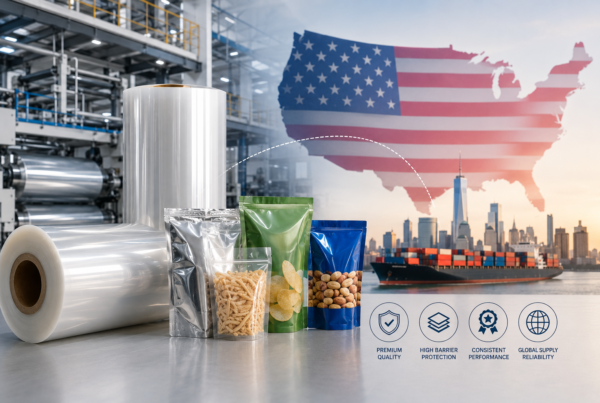

A packaging film can look suitable on a sample roll but behave differently on a production line. Sealing problems, inconsistent film handling and unsuitable material specifications can affect packaging efficiency and product quality.
For converters and brand owners searching for top flexible CPP packaging manufacturers in India, the important question is not simply which supplier offers the lowest price. It is which manufacturer can provide the appropriate film for the intended application and maintain consistent performance.
Understanding CPP film and its applications makes that decision easier.
What is CPP film?
CPP stands for Cast Polypropylene. Manufacturers produce it by extruding molten polypropylene through a flat die and cooling it on a chilled roll. CPP is generally flexible and offers useful heat-sealing characteristics. It is commonly used as a sealant layer in laminated packaging and in other applications that require suitable film flexibility and sealing performance.
Unlike BOPP, CPP is not stretched in two directions after casting. This difference affects the films’ mechanical characteristics and typical packaging applications.
Why CPP film is important in flexible packaging
Flexible packaging often uses multiple materials, with each layer performing a specific function. An outer layer may carry printed graphics, while an inner layer provides the sealing surface. CPP can serve as a sealant layer in suitable laminated structures.
This arrangement allows packaging designers to select materials according to the product’s protection, appearance and manufacturing requirements. However, CPP is not automatically the best choice for every packaging application. The required film grade and laminate structure depend on the product, the machine and the intended storage conditions.
Common CPP film applications
Food and snack packaging
CPP can serve as a sealing layer in suitable snack and food packaging laminates. The packaging designer must consider the product’s sensitivity, required barrier performance, sealing conditions and distribution environment.
Confectionery and bakery packaging
Flexible packaging for confectionery and bakery products may require good appearance, reliable seals and compatibility with high-speed packaging equipment. CPP can contribute to these requirements when the selected grade matches the packaging process.
Pharmaceutical and medical packaging
Packaging for pharmaceutical and medical applications requires careful material selection and appropriate compliance documentation. The intended application must determine the required material specifications and supporting documentation.
Retort and specialised packaging
Some CPP grades are developed for demanding applications, including packaging that experiences heat processing. Buyers should verify the specific grade’s suitability rather than assuming that all CPP films can withstand the same conditions.
Kanodia Technoplast lists CPP applications including snack packaging, confectionery, medical packaging, lamination and retort packaging. Its speciality films range includes application-specific CPP grades.
What should buyers evaluate before selecting CPP film?
Seal performance
Sealing is one of the most important considerations when selecting CPP film. The buyer should understand the required sealing temperature, seal strength and hot tack performance. These characteristics affect how the film behaves during packaging production. Ask the supplier for technical information relevant to the exact grade being considered.
Film thickness and consistency
Film thickness affects material usage, handling and packaging performance. The specification should include the required thickness and acceptable tolerance. Buyers should also discuss how consistency is monitored across production batches.
Surface treatment and printability
Surface treatment helps improve the adhesion of inks and adhesives to suitable film surfaces. If the packaging requires printing or lamination, buyers should confirm the treatment requirements and evaluate the material through appropriate trials.
Machine compatibility
Film performance depends on the packaging equipment and operating conditions. A film that works well on one machine may require different settings on another. Buyers should evaluate the material using their own equipment and production conditions.
CPP versus BOPP: Which film should you choose?
CPP and BOPP are both important polypropylene packaging films, but they serve different roles.
| Consideration | CPP | BOPP |
| Manufacturing process | Cast film | Film stretched in two directions |
| Typical characteristics | Flexible and heat-sealable | Generally stiffer |
| Common packaging role | Sealant layer in laminates | Printed outer layer in suitable structures |
| Selection priority | Sealing and flexibility | Stiffness, appearance and application requirements |
These are general tendencies. Actual performance depends on the film grade, thickness and complete packaging structure. A packaging buyer should select the film according to the intended application rather than treating CPP and BOPP as interchangeable materials.
How to compare CPP film manufacturers in India
A reliable supplier evaluation process should include the following:
- Confirm that the manufacturer offers the required CPP grade.
- Review the technical specifications and supporting documentation.
- Evaluate the film on the intended packaging equipment.
- Compare sealing, handling and quality consistency.
- Discuss supply requirements, customisation and technical support.
A production trial is particularly useful when introducing a new film or changing suppliers. The trial should use the intended packaging structure and record the conditions under which the film performs satisfactorily.
How Kanodia Technoplast supports CPP film requirements
Kanodia Technoplast offers CPP films through its packaging films division. The company’s website describes a 7-layer CPP film plant and lists transparent, metallised and white opaque speciality film variants. Its speciality films page also discusses application-specific grades for different packaging requirements.
For buyers evaluating CPP film, the appropriate next step is to identify the intended application, confirm the required specifications and discuss grade suitability with the manufacturer.
Conclusion
Selecting among top flexible CPP packaging manufacturers in India requires more than comparing quotations. Buyers should evaluate sealing performance, film consistency, machine compatibility, technical support and the manufacturer’s ability to provide the required grade.
A suitable CPP film can support efficient packaging operations when its characteristics match the product and production process.
CTA: Explore Kanodia Technoplast’s packaging films at https://kanodiaindia.com/packaging-films/ or speciality films at https://kanodiaindia.com/packaging-films/speciality-films/ to learn more about its CPP film range.
Reference Link Table
| Relevant resource | Why it is relevant | Link |
| Packaging Films | Overview of the company’s film categories | https://kanodiaindia.com/packaging-films/ |
| Speciality Films | CPP film variants and application information | https://kanodiaindia.com/packaging-films/speciality-films/ |
| CPP Film Supplier Guide | Practical information about CPP selection | https://kanodiaindia.com/blog/how-to-choose-reliable-cpp-film-suppliers-for-flexible-packaging-applications/ |
FAQs
What is CPP film used for?
CPP film is used in flexible packaging, including as a sealant layer in laminates and in suitable snack, confectionery and specialised packaging applications.
How is CPP different from BOPP?
CPP is cast and generally more flexible, while BOPP is stretched in two directions and is generally stiffer.
What should I check before buying CPP film?
Check the film grade, thickness, sealing performance, surface treatment, machine compatibility and supporting technical documentation.
Can CPP film be used for food packaging?
Yes, suitable CPP grades are used in food packaging. The complete structure must meet the product’s requirements and applicable regulations.
Why is CPP film used as a sealant layer?
Suitable CPP grades provide heat-sealing characteristics that help close flexible packaging laminates.
Does Kanodia Technoplast manufacture CPP film?
Yes. Kanodia Technoplast lists CPP film in its packaging films range and describes its 7-layer CPP film manufacturing capability.