
Ask five procurement managers what a packaging company does, and you may hear five different answers. One buys film rolls. Another buys printed pouches. A third sources printing cylinders and inks, and a fourth needs cores for slitting and rewinding. All of them are looking for the best packaging company in India, yet each needs a different kind of supplier.
That gap explains why many sourcing projects stall. Buyers compare quotes from companies that do not do the same job. This article starts one step earlier and helps you decide what type of supplier you need, then how to judge the candidates fairly.
Start With What You Are Actually Buying
Before you shortlist anyone, write a one-page description of the packaging you need. Name the product, the pack format, the filling method, the expected shelf life, and the volume you expect over the next twelve months. Add anything that restricts the choice, such as regulatory expectations, brand artwork, or a requirement for recycled or mono-material content.
This page does two jobs. It gives suppliers a clear brief, and it protects you from vague proposals. A supplier that cannot respond to specifics is unlikely to manage your repeat orders well.
Three Kinds of Packaging Supplier
The Indian market uses the word “packaging company” loosely. In practice, most businesses fall into three groups, and many span more than one.
Material manufacturers
These companies make the base materials, such as plastic films, papers or board. A buyer here is usually a converter or a large brand with its own converting capability. The conversation centres on grades, gauges, surface treatment, consistency of properties and supply continuity.
Converters
Converters turn materials into packaging. They print, laminate, slit, and form rolls or pouches. A brand that wants printed roll stock for its own packing line often buys from a converter. The conversation centres on print quality, lamination integrity, registration and turnaround.
Finished-packaging suppliers
These suppliers deliver ready-to-use packs, such as stand-up pouches, spout pouches or paper-based packs. Brands with small packing teams often prefer this route because the supplier carries the technical burden. The conversation centres on pack design, closure performance, fill compatibility and minimum order quantities.
Supporting suppliers
Do not overlook the inputs that decide print and conversion quality. Rotogravure cylinders, inks, adhesives and paper cores all affect the final result. A weak input can undermine an excellent film.
Which Supplier Type Fits Which Requirement
A mid-sized converter that already owns presses and laminators usually needs a reliable material manufacturer, plus consistent inks and adhesives. A snack brand with a vertical form-fill-seal machine may want printed roll stock from a converter, with a technical contact who can visit the line. A personal care brand launching a refill pouch may prefer a finished-packaging supplier that handles structure, closure and printing together.
If you are unsure, ask each shortlisted company one question: “Which step of the packaging chain do you control directly?” The honest answer tells you where responsibility sits when something goes wrong.
Checks That Apply to Every Packaging Supplier
Whatever the type, the same fundamentals separate dependable partners from risky ones.
Material quality and specification control. Ask for technical data sheets and clear tolerances. Compare them with what you actually need, rather than with the most impressive number on offer.
Application suitability. A supplier should connect its product to your use case. Moisture sensitivity, grease, puncture risk, hot filling and storage conditions should all come up in the discussion.
Consistency. Samples show what a supplier can do. Repeat orders show what it does every day. Ask about batch testing, traceability and how deviations are handled.
Technical assistance. Look for a team that offers trial support, troubleshooting and clear communication. Good support saves more money than a small price concession.
Documentation. Depending on your product, you may need declarations, test reports or compliance documents. Ask what is available and what the supplier will not provide, and get the answer in writing.
Visits and references. Where practical, visit the plant or request a virtual walk-through. Observe how materials are stored, how batches are labelled and how quality records are kept. Ask whether current customers in your segment are willing to share their experience, and treat a refusal as information rather than as an insult.
Commercial Considerations Beyond the Quote
A quotation compares only what is written on it. Several costs sit outside the page.
Minimum order quantities decide how much stock you must carry. Lead times decide how much safety stock you need. Payment terms affect working capital. Artwork changes, new cylinders and repeat approvals add time and cost, so ask how the supplier handles them.
Then consider total cost. A film that runs well on your machine at a higher rate can beat a cheaper film that causes breaks, rejects or slow speeds. Ask your own operations team to estimate line downtime and wastage, and include those figures in the comparison.
One Supplier or Several?
Buyers often ask whether to concentrate purchases with one integrated supplier or spread them across several.
The case for fewer suppliers is practical. One technical contact can coordinate film, print and pouch format, and fewer hand-offs reduce mismatches between components. The case for several suppliers is resilience. A second source protects you from disruption and keeps pricing honest.
A sensible middle path is to run most volume through one qualified partner while keeping a second supplier approved on the same specification. Approve the second source properly, with trials, rather than waiting for an emergency.
Kanodia India’s Range and the Requirements It Can Support
Kanodia Technoplast, which publishes its range at kanodiaindia.com, presents itself as an integrated flexible packaging company operating since 1995. Its website lists a wide range. The pages below are the ones most relevant to the supplier types described above, and the descriptions reflect what the company publishes.
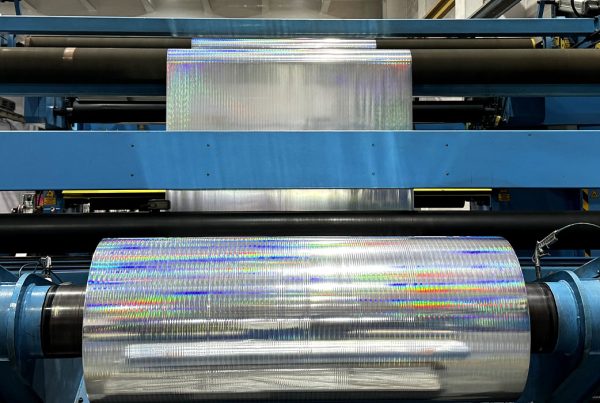
- Films for converters and brands. The packaging films range includes CPP, metallised, blown PE, holographic and window metallised films, which suit buyers who convert or laminate material themselves.
- Ready pouches for brands. The spout pouch packaging page covers liquid and semi-liquid formats, and the pre-formed pouches page lists stand-up, shaped, quad seal and resealable options.
- Printing inputs. The inks and adhesives page describes an in-house division producing gravure and flexographic inks, and the company also lists rotogravure cylinders.
- Paper-based alternatives. The paper-based packaging page presents mono-material paper packaging as an alternative to plastic for suitable applications.
- Cores for roll handling. The paper cores and tubes page lists cores for flexible film, textiles, tapes and labels.
For a buyer, the practical value is the ability to discuss several linked requirements in one conversation. Still, any company’s own pages are promotional. Test suitability through samples, trial runs and technical questions, as you would with any other packaging solutions manufacturer in India.
Warning Signs When Evaluating Suppliers
Be cautious when a supplier quotes without asking about your product, avoids sharing technical data, or promises every material, size and finish at the lowest price. Be equally careful when references cannot be discussed, when sample quality differs sharply from production quality, or when communication slows after the first meeting.
None of these signs proves a problem by itself. Together, they suggest the relationship will be harder than the quote implies.
Choosing the Best Packaging Company in India: A Practical Summary
The best packaging company in India for you is the one that matches your product, controls the steps you depend on, and proves consistency over time. Define your requirement, identify the supplier type, check documentation and support, and compare total cost instead of unit price.
If your requirement involves films, pouches, inks, paper-based packs or cores, review the Kanodia India product pages above and share your specification. You can also email info@kanodiaindia.com to discuss a product-related enquiry.
REFERENCE LINKS
| Relevant page or resource | Why it is relevant | Verified URL |
| About Kanodia Technoplast | Company background and the three divisions behind the product range | https://kanodiaindia.com/about-us/ |
| Packaging Films | Lists the film types available to converters and brands | https://kanodiaindia.com/packaging-films/ |
| Pre-Formed Pouches | Shows ready-to-fill pouch formats for brands | https://kanodiaindia.com/pre-formed-pouches/ |
| Contact Us | Route for product-related enquiries | https://kanodiaindia.com/contact-us/ |
FREQUENTLY ASKED QUESTIONS
What is the difference between a packaging manufacturer and a packaging converter?
A manufacturer makes base materials such as films or papers, while a converter prints, laminates and shapes them into rolls or packs. Some companies do both.
How do I shortlist packaging suppliers for a new product?
Write a clear brief covering product, format, filling method, shelf life and volume. Then ask each supplier which part of the packaging chain it controls directly.
Should I buy all my packaging from one supplier?
One supplier can simplify coordination, but a second approved source protects you from disruption. Many buyers split volume while keeping both suppliers qualified.
What documents should I ask a packaging supplier for?
Ask for technical data sheets, test reports and any compliance declarations that apply to your product. Confirm in writing what the supplier can and cannot provide.
How many samples should I test before a bulk order?
Test more than one batch where possible, and run at least one trial on your own machine. A single sample shows capability but not consistency.
What does Kanodia India offer besides packaging films?
Its website also lists laminated films, pre-formed and spout pouches, rotogravure cylinders, inks and adhesives, paper cores and tubes, and paper-based packaging. Share your requirement with the team to confirm what suits your application.
Are paper-based and mono-material packs more sustainable?
They can simplify recycling, but results depend on the full pack structure and local collection systems. Ask suppliers for specifics rather than relying on general labels.