Ask a production manager what slows down a packaging line, and film behaviour comes up quickly: seals that fail at speed, rolls that vary in gauge, metallised layers that scuff, inks that never quite anchor. These problems rarely begin on the line. They begin when a film is chosen from a data sheet and a price, without a close look at the packaging films suppliers behind it.
This guide is for converters, FMCG brands and procurement teams that buy flexible packaging film in volume. It explains the main film types, the questions that separate a dependable supplier from a merely convenient one, and how to match film to the product.
Key takeaways
- Judge packaging films suppliers on range, process control, capacity and technical support, not price per kilogram alone.
- Most packs are laminates, so the right film depends on the product, the machine and the print method.
- Run trials on your own equipment before approving a new supplier.
- Ask for batch-level test data and documents that match your market.
What Packaging Films Suppliers Actually Provide
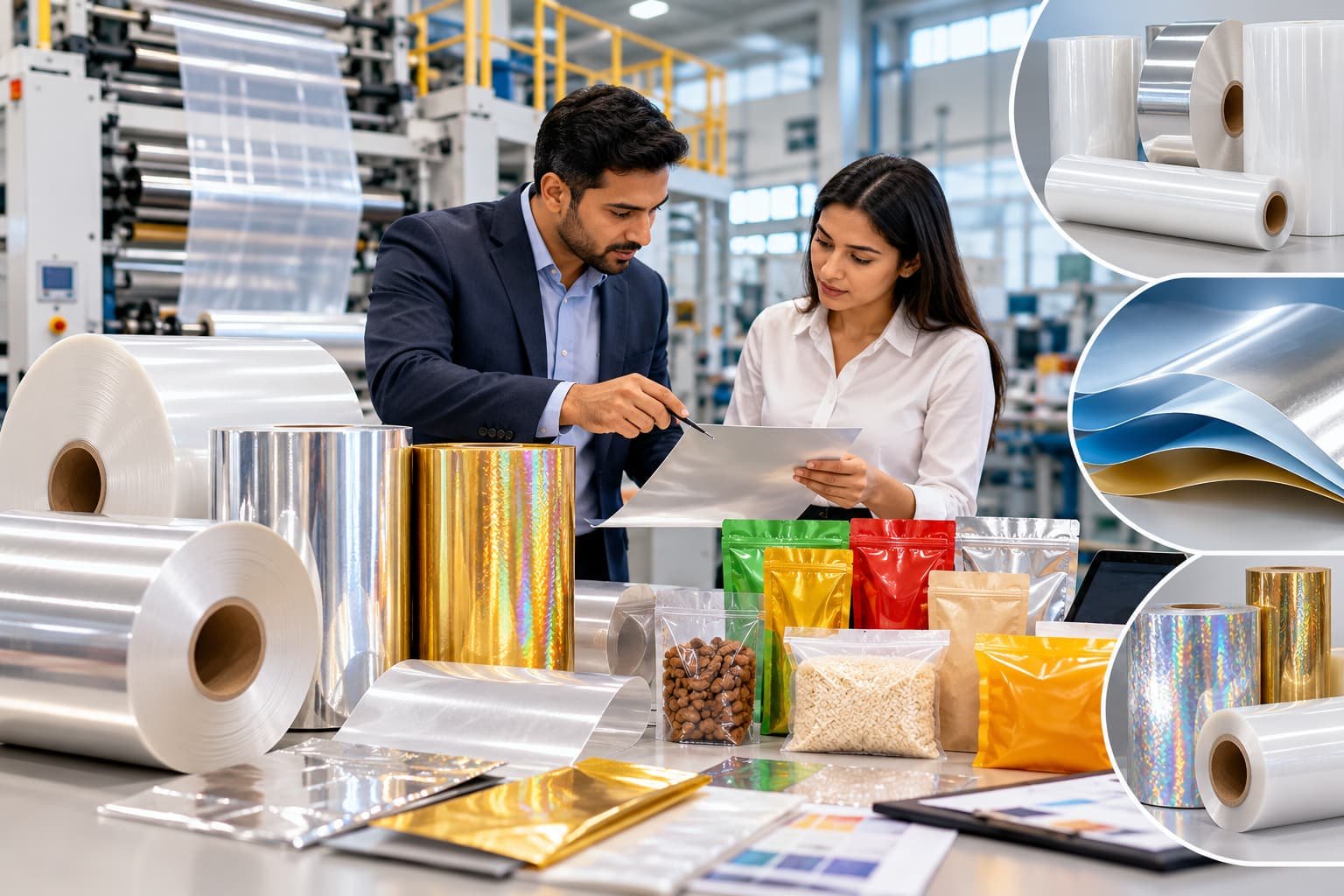
A good supplier sells more than rolls. The relationship should cover film design, trial support, steady supply and technical help when a job misbehaves on press or on the filling line.
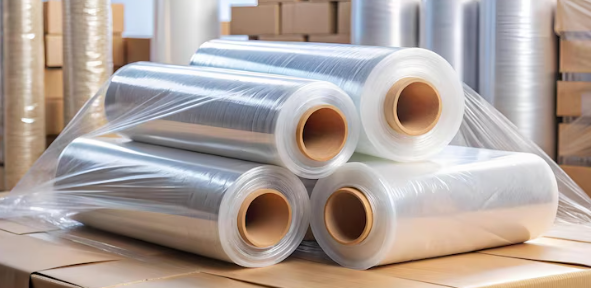
Films come in a few broad families. Polypropylene includes cast polypropylene (CPP) and biaxially oriented polypropylene (BOPP). Polyester (BOPET) adds stiffness and heat resistance. Polyethylene (PE) brings flexibility and easy sealing. Many of these are then metallised, laminated or given a special finish. Suppliers differ in how much of this they make in-house, and that decides how much control you have over quality and lead time.
The Main Packaging Film Types and Where They Fit
Each film does a particular job:
- CPP: soft, clear and heat-sealable, widely used as the sealing layer in laminates and for snack, bakery and confectionery packs.
- BOPP: stiff, clear and moisture resistant, often the printed outer layer.
- BOPET (polyester): strong and heat resistant, a common base for metallising and high-barrier structures.
- Blown PE: tough and flexible, used for sealing layers and heavy-duty packs.
- Metallised films: a very thin aluminium layer on a plastic base, adding a barrier to light, oxygen and moisture along with shelf appeal.
- Holographic and window metallised films: security and visual effect, with window versions keeping a clear section so the product stays visible.
No single film does everything, which is why most packs are laminates. The laminated films page at Kanodia Technoplast lists typical pairings: BOPP/PE for snacks and cereals, PET/PE for dairy and confectionery, and PET/Al/PE for pharma and coffee.
Barrier, Sealing and Machinability: The Three Specs That Matter Most
Three performance areas decide most film choices.
Barrier is the film’s resistance to moisture, oxygen and light. Plain polypropylene films resist moisture well but let oxygen through, so products that oxidise, such as oils and some snacks, often need a metallised layer or a laminate that includes foil or another barrier film.
Sealing is how the film closes the pack. Two numbers matter: the temperature at which sealing starts, and hot tack, the strength of the seal while it is still warm. On fast lines, a lower sealing temperature and good hot tack let the machine run faster with fewer leaks.
Machinability covers how the film moves through the line: slip, static, stiffness and gauge uniformity. A film that looks perfect on paper but wanders or clings on a high-speed machine costs more than it saves.
Ask suppliers to quantify each of these for your grade, then compare the numbers with what your machine actually demands.
Start With the Product, Not the Film
The most useful supplier conversation starts with the product. A potato chip pack needs a strong moisture and light barrier, reliable seals on a fast form-fill-seal machine and graphics that stay sharp. A cheese pack needs puncture resistance and oxygen control, which points to a different laminate. A pharma sachet puts consistency and documentation first.
Before you approach suppliers, write down the shelf life, filling temperature, machine speed, printing method, pack format and any regulatory needs. A supplier who asks you for these details is doing the job properly. One who quotes without asking is guessing.
How to Evaluate Packaging Films Suppliers
Use the points below as a working checklist.
Range and customisation. Check whether the supplier can tailor structure, thickness, barrier and finish, or only sells catalogue grades. A narrow range often forces compromises in your pack design.
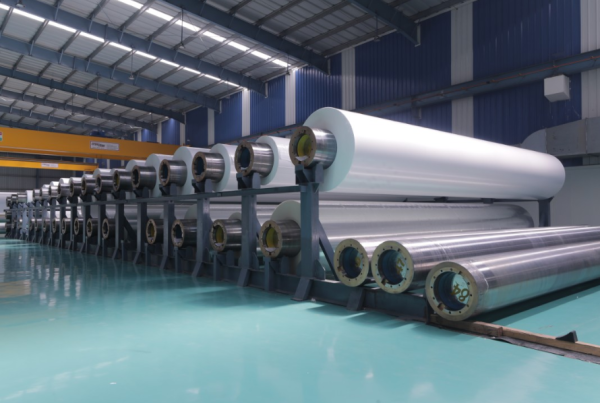
Technology and process control. Ask which extrusion and metallising lines they run and how quality is monitored. Wide, modern lines generally support better uniformity across the roll.
Capacity and continuity. A supplier that cannot cover a demand spike can stop your line. Ask about capacity, buffer stock and how many plants supply your grade.
Testing and data. Request seal strength, hot tack, gauge, coefficient of friction and surface treatment data, preferably batch by batch.
Print and lamination readiness. Surface treatment decides how well inks and adhesives anchor. Ask how the treatment level holds up during storage.
Compliance documents. Ask for the food-contact or pharma documentation relevant to your market. Do not assume it exists.
Sustainability options. Ask about down-gauged films, mono-material structures and recycled-content options, and what each does to performance.
Finally, plan a trial. Run each shortlisted film with the same artwork and at the same speed, then record seal failures, registration, waste and operator feedback. A film that wins the trial is a better basis for a contract than any brochure.
Why Printers Care About Film Choice
Gravure and flexo printers feel film decisions first. Surface treatment, gauge consistency and slip all affect ink transfer and registration. A rotogravure cylinder is engraved for a specific substrate, ink and machine, so a change of film can change how a job prints. When you switch suppliers, run a print trial instead of assuming two films behave alike.
This is one reason film and print capability belong close together. Kanodia Technoplast also manufactures rotogravure cylinders, and states that making them in-house reduces cost and lead time for new artwork.
Common Sourcing Mistakes
A few errors repeat across buying teams:
- Comparing price per kilogram instead of cost per pack, which depends on gauge and yield
- Approving a supplier on one sample instead of several batches
- Ignoring the seal window against actual machine speed
- Relying on a single source with no backup grade
- Skipping trials on the real filling or printing line
Each of these looks small at purchase time and expensive in production.
How Kanodia Technoplast Supports Packaging Film Requirements
Kanodia Technoplast has operated in flexible packaging since 1995, with facilities in Delhi and Kundli, Haryana. Its packaging films range covers BOPP film, 7-layer CPP film, vacuum metallised films, blown PE films, high-security holographic films, window metallised films and gift wraps.
The company says its production lines come from manufacturers such as Windmöller & Hölscher and Kuhne, and that its vacuum metalliser, more than three metres wide, handles BOPET, BOPP and CPP. It states annual capacity often above 18,000 MT and works with customers to tailor structure, thickness, barrier properties and finish. The 7-layer CPP film plant page explains the CPP range in detail.
Its films serve snack food, beverages, dairy, pharma, soap and detergent, rice and cereals, sugar, lubricants and gift wrap, among other segments. Beyond film, the group offers laminated films, pre-formed pouches, inks and adhesives, and rotogravure cylinders.
Final Takeaway
The best packaging films suppliers behave like technical partners. They ask about your product, show test data, run trials with you and keep supply steady. Choose on those qualities first and negotiate price second.
If you are reviewing film options for a new pack or a supplier change, explore Kanodia Technoplast’s packaging films range, or contact the team with your product, machine speed and barrier requirements.
Frequently Asked Questions
What do packaging films suppliers provide?
Packaging films suppliers provide plastic films such as CPP, BOPP, BOPET and PE, often with metallised, holographic or laminated finishes. Good suppliers also offer customisation, trial rolls, test data and technical support.
What types of packaging films are used in flexible packaging?
Common types include CPP, BOPP, BOPET, blown PE, metallised films, holographic films and laminated structures. Most packs combine several layers so each layer can handle sealing, barrier, strength or print.
How do you choose a packaging films supplier?
Start with your product, machine speed, barrier needs and print method. Then compare suppliers on range, process control, capacity, test data, trial support and documentation.
What is the difference between CPP and BOPP film?
CPP is soft and seals at lower temperatures, so it is often the sealing layer. BOPP is stiffer and clearer with a good printing surface, so it is often the outer layer.
Why are packaging films laminated?
Lamination bonds two or more films so each layer adds a property, such as print quality, moisture or oxygen barrier, strength or heat sealing. No single film delivers all of these together.
What should I ask a packaging films supplier before ordering?
Ask for seal strength, hot tack, gauge tolerance, friction and surface treatment data for your exact grade. Also ask about capacity, lead time, trial rolls and the documents available for food or pharma use.
Which industries use packaging films?
Packaging films are used for snack food, beverages, dairy, pharmaceuticals, soap and detergent, rice and cereals, sugar, lubricants, confectionery and gift wrap, among others.
Can packaging films be customised?
Yes. Structure, thickness, barrier properties and finish can often be tailored to the product and machine, subject to the supplier’s equipment and minimum order quantity.